Reviewed · TOURS
Jewish Tour in Granada
Granada’s Jewish past is easiest to understand when you connect scattered clues across the city. This private tour does exactly that, linking Queen Isabel and Columbus, the Jewish physician and translator Yehuda ibn Tibon, an old defensive fortress, and the Mirador de San Nicolas with its grand view of the Alhambra. Much of the physical quarter is gone, so the guide’s storytelling matters.
I like the private format, since your group can ask questions and move at a sensible pace. I also like the practical use of a taxi to reach a high viewpoint rather than spending precious tour time grinding up Granada’s hills. The main consideration is simple: this is a history walk with outdoor stops, not a visit to a preserved Jewish quarter or a museum packed with surviving objects.
Key points to know before booking
- A vanished Jewish quarter is the focus: Expect interpretation and historical context more than intact buildings.
- Yehuda ibn Tibon gets a dedicated stop: His work as a physician and translator gives the tour a personal historical anchor.
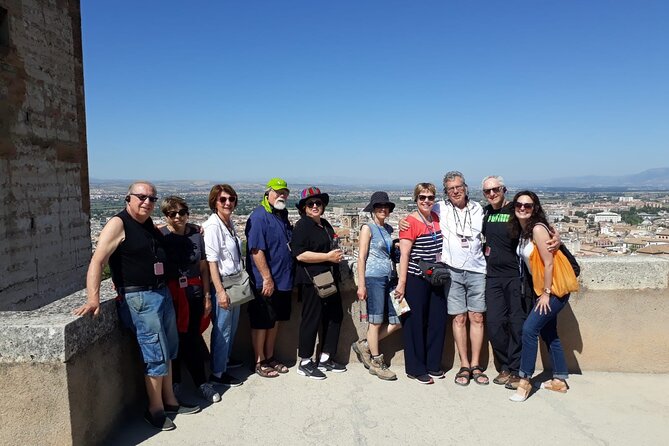
- The Alhambra view is part of the experience: Mirador de San Nicolas offers 15 minutes for one of Granada’s great panoramas.
- Private touring keeps the pace flexible: Only your group of up to five people takes part.
- The route includes hills and outdoor walking: A moderate level of fitness is recommended.
- The price works best for a full group: At $383.44 total, the cost per person drops sharply when four or five people share it.
Why Granada’s Jewish story feels different
Granada is famous for the Alhambra, Islamic architecture, and the final Christian conquest of Muslim Spain. This tour asks you to look at the city through another lens: the Jewish community that lived, worked, translated, traded, and worshipped here before the political order changed.
Do not expect a complete medieval neighborhood waiting behind a gate. The tour makes clear that very little material evidence remains. The destruction associated with Queen Isabel means the Jewish quarter is something you reconstruct through place names, civic history, people, and the shape of the city rather than simply photograph.
That can sound like a limitation, but it also gives the walk a useful purpose. You are not just checking off a synagogue or an old wall. You are learning how political change can erase a community from the built environment while leaving traces in the historical record.
The opening stop, Plaza de Isabel La Catolica, sets the tone. The statue of Queen Isabel and Christopher Columbus brings you to the moment when Granada’s conquest helped redirect world history. The guide uses the encounter to ask how the reconquista changed Spain, Europe, and the wider world.
I like beginning here because it keeps the Jewish story tied to the larger forces around it. You will not study Granada in isolation. You will see how royal decisions, religious policy, conquest, and exploration overlap.
A few more Granada tours and experiences worth a look
- Granada: Alhambra & Nasrid Palaces Tour with Tickets
★ 4.7 · 19,801 reviews - Granada: Alhambra & Generalife Fast-Track Guided Tour
★ 4.7 · 8,313 reviews - Granada: Alhambra & Gardens Tour w/Nasrid Palaces Option
★ 4.5 · 6,437 reviews
Plaza Nueva is a useful starting point
The tour begins and ends at Plaza Nueva, a central location in Granada. That makes the experience easy to fit into a day of sightseeing, since you are not left at a distant neighborhood with the task of finding your way back.
The listed duration is about two hours and 30 minutes. The named stops account for roughly 55 minutes of formal time: 10 minutes at Plaza de Isabel La Catolica, 10 minutes at Yehuda ibn Tibon’s statue, 10 minutes at Torres Bermejas, 15 minutes at Mirador de San Nicolas, and 10 minutes at Plaza Larga.
The remaining time is important. It allows for walking, explanations, transitions, and the practical business of moving through Granada. This is not a rushed photo circuit, but it is also not an all-day seminar. You get a focused introduction to the subject without giving up most of your sightseeing day.
Pickup and personalized transfers are available. One especially useful detail is the possibility of taking a taxi to a high viewpoint. Granada’s hills can turn a short distance into a serious climb, and using a taxi can preserve both your energy and the time available for the actual history.
Plaza de Isabel La Catolica and the turning point of 1492
At the first stop, you meet Queen Isabel and Christopher Columbus in bronze form. The statue provides a direct way into the question at the heart of the opening discussion: how did the reconquista of Granada change the history of the world?
The stop is scheduled for only 10 minutes, so you should expect a concise explanation rather than a long lecture. That is a sensible use of time. The statue itself is not the main attraction. Its value is as a marker of the political moment that shaped everything that followed.
This is also where the tour’s wider meaning becomes clear. Granada’s Jewish past cannot be separated from the decisions of the Christian monarchy. The same era that brought the conquest of Granada also brought sweeping changes to religious life and public identity.
I appreciate the fact that the tour begins with a difficult historical question rather than a list of dates. You are encouraged to think about consequences. The stop is brief, but it gives the later locations a frame.
Yehuda ibn Tibon gives the story a human face
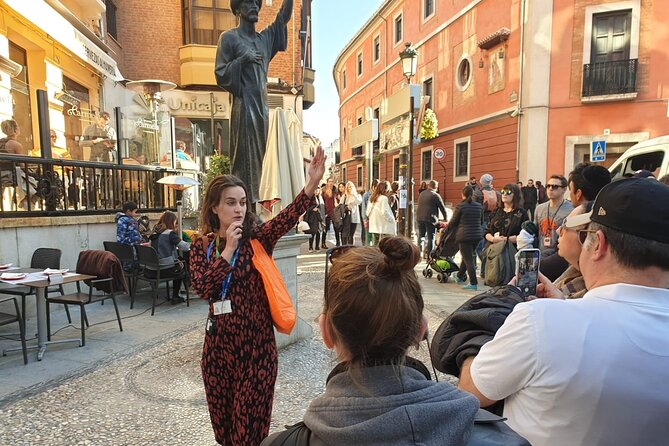
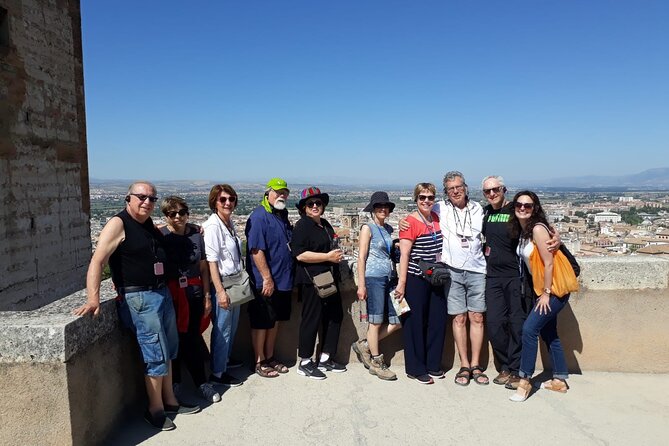
The statue of Yehuda ibn Tibon is one of the most specific stops on the route. He was a prominent Jewish physician and translated Jewish works written in Arabic into Hebrew.
That detail matters. It shows Granada as a place where languages, medicine, scholarship, and religious thought crossed paths. Yehuda ibn Tibon was not simply a name attached to a monument. His work points to the intellectual life of Jewish communities in medieval Iberia.
The 10-minute stop is short, yet the subject has enough substance to support a useful conversation. Ask your guide how translation affected the survival and spread of Jewish writing. You can also ask how a physician and translator fit into Granada’s social world. The supplied information does not promise a long academic talk, but this is the point where a good guide can give the tour its strongest personal detail.
Marilyn is one guide associated with this experience. She is not Jewish, but she has studied Sephardic Jewish history as well as Hebrew and Arabic, and she is described as having a master’s degree in the subject area. That background is particularly relevant here, where language and interpretation are central.
The absence of surviving buildings makes this stop even more useful. A statue may seem modest beside the Alhambra, but it gives you a named person to remember. That is often more effective than hearing only about an anonymous community.
A completely different sort of day out in Granada:
- Granada: Alhambra Entry Ticket with Audio Guide
★ 4.1 · 5,950 reviews - Fast-Track Alhambra & Nasrid Palaces Guided Tour
★ 4.7 · 4,379 reviews - Skip The Line Alhambra and Generalife Guided Tour
★ 4.0 · 3,825 reviews - Granada: Alhambra Ticket and Guided Tour with Nasrid Palaces
★ 4.7 · 3,496 reviews
Torres Bermejas and the edge of the old quarter
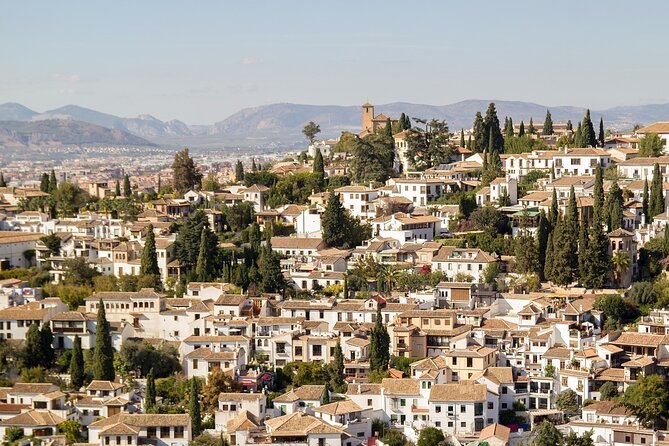
Torres Bermejas is described as the fortress that protected the Jewish quarter. The stop lasts about 10 minutes and is another outdoor encounter rather than an extended interior visit.
The fortification helps you think spatially. Instead of treating the Jewish quarter as a vague idea, you get a physical point connected to defense and the city’s old divisions. The value here comes from the explanation of how the fortress related to the quarter, not simply from looking at stone towers.
There is a practical limit. The information provided does not indicate that you enter the fortress or receive a special interior visit. Plan on hearing the story from outside and using the site as a visual aid.
I like stops such as this because they make the city itself part of the evidence. Even when a community’s homes, institutions, and religious buildings have disappeared, walls and defensive structures can help you understand where people lived and how the city was organized.
Mirador de San Nicolas rewards the uphill effort
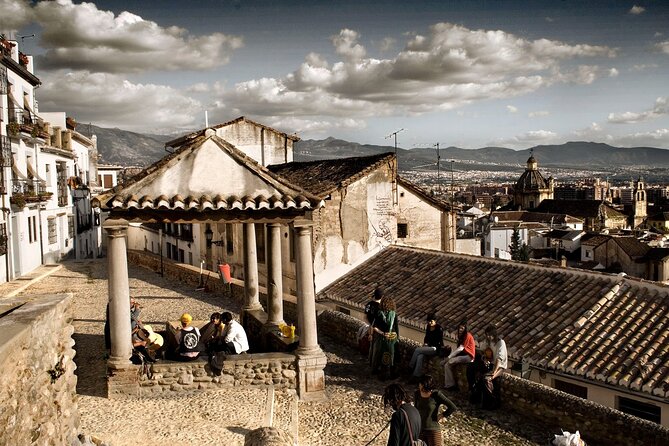
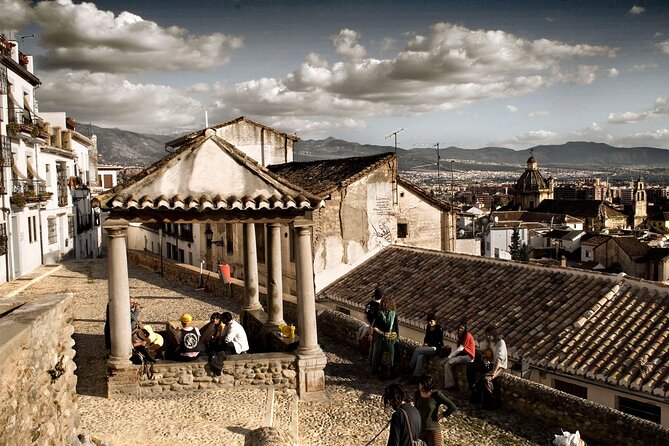
The Mirador de San Nicolas is the visual high point of the tour. You get about 15 minutes for views of the Alhambra, one of Granada’s most memorable sights.
This stop is not specifically a Jewish monument, but it earns its place because it lets you see the city as a whole. From a high viewpoint, the relationships among the old quarters, fortifications, hills, and palace complex become easier to grasp.
The practical advice here is worth taking seriously: use a taxi if your guide offers that option. A taxi ride to the viewpoint can save energy and protect the time needed for explanation. Walking uphill may sound manageable on a map, but Granada is not flat, and this route already includes outdoor movement.
You should also treat the viewpoint as a place for orientation rather than a substitute for the Alhambra visit. The tour does not include entry to the Alhambra, and this stop gives you a view of it from outside. If you want palace interiors and detailed Islamic architecture, you need a separate ticket and visit.
Still, the panorama adds welcome variety. After several historical points and statues, you get a chance to pause, look outward, and understand Granada’s setting.
Plaza Larga closes the route with everyday Granada
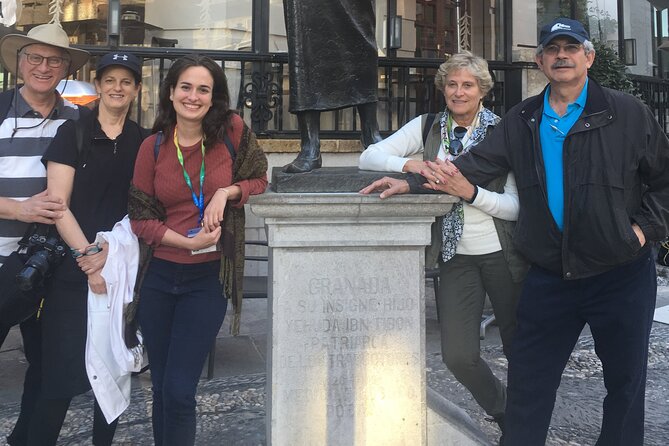
Plaza Larga is described as one of the oldest plazas in Granada. The stop lasts about 10 minutes and brings the tour into a public square rather than ending with another formal monument.
That change of scale is useful. A city’s history is not only found in royal statues and defensive towers. Old plazas show how urban life gathers around shared spaces. The stop can help you picture the long continuity of daily movement through Granada, even when the communities who once used these spaces have changed.
Because the tour ends back at Plaza Nueva, Plaza Larga is not the final logistical point. You return to the original meeting place, which makes onward plans easier. The route therefore gives you a high viewpoint, an old plaza, and a central finish without leaving you to arrange a complicated return.
What the private format is really worth
The price is $383.44 per group of up to five people. That works out to about $76.69 per person if five people join, $95.86 each for four, $127.81 each for three, and $191.72 each for two.
That calculation tells you who gets the best value. For a family or group of friends already planning to tour together, the private setup can be reasonable. A pair pays a much higher individual rate, so you should be sure the Jewish history focus is a priority before booking.
The benefit is control. Only your group participates, so you can ask for more explanation at Yehuda ibn Tibon’s statue, shorten a stop that interests you less, or discuss the larger political story at Plaza de Isabel La Catolica. The available information does not promise unlimited customization, but a private tour normally gives you more room for questions than a large group walk.
The price also includes an English-speaking experience, mobile ticketing, and pickup options. The important value, though, is the guide’s interpretation. Since few physical remains survive, the tour rises or falls on how clearly the guide connects the places.
Physical effort, timing, and who should book
The tour is recommended for people with a moderate level of physical fitness. That advice should shape your decision. You will move through an old, hilly city, and some parts may require uphill walking, even if a taxi is used for a major transfer.
The scheduled operating hours are 10:30 a.m. to 5 p.m., Monday through Sunday, for the stated operating period from April 1, 2024, through January 31, 2027. Confirmation is sent within 48 hours of booking, subject to availability.
I would choose this tour if you want a focused introduction to Sephardic Jewish history in Granada, prefer a private guide, and value context over a long list of preserved buildings. It also suits visitors who want to combine history with a strong Alhambra viewpoint.
I would hesitate if you need a museum-style experience, want extensive access to surviving Jewish buildings, or dislike hills and outdoor walking. The tour is strongest as an interpretive city walk. It is not a replacement for the Alhambra, a full architectural tour of Granada, or a visit built around interior sites.
The experience is offered in English. Service animals are allowed, and the route is near public transportation. Free cancellation is available if you cancel at least 24 hours before the start time. Changes or cancellations made less than 24 hours ahead are not accepted for a refund.
Should you book this Granada Jewish tour?
Book it if you want the human and political story behind a city where much of the Jewish quarter has disappeared. The statue of Yehuda ibn Tibon, the connection to Torres Bermejas, and the opening discussion of Queen Isabel give the route a clear shape. Marilyn’s background in Sephardic Jewish history, Hebrew, and Arabic is an especially good fit for a subject that depends so heavily on language and interpretation.
The smartest booking choice is for three to five people who can share the $383.44 group price. Ask about pickup or taxi assistance if hills are a concern. If your interest is mainly the Alhambra’s interiors, spend your money elsewhere. If you want to understand the forces that shaped Granada beyond its famous palace, this private walk offers a compact and thoughtful introduction.
FAQ
Where does the Jewish Tour in Granada begin?
It begins at Plaza Nueva, Pl. Nueva, 18010 Granada, Spain.
Where does the tour end?
The tour ends at Plaza Nueva, the same location where it begins.
How long does the tour last?
The tour lasts approximately two hours and 30 minutes.
Is this a private tour?
Yes. Only your group participates, with a maximum of five people.
What language is offered?
The tour is offered in English.
How much does the tour cost?
The price is $383.44 per group of up to five people.
Is pickup available?
Yes. Personalized pickup and transfers are available.
What places are included?
The route includes Plaza de Isabel La Catolica, the statue of Yehuda ibn Tibon, Torres Bermejas, Mirador de San Nicolas, and Plaza Larga.
Is the tour physically demanding?
A moderate level of physical fitness is recommended. The route includes walking in Granada, and a taxi may be used to reach a high viewpoint.
Can I cancel for a full refund?
Yes, if you cancel at least 24 hours before the experience begins. Cancellations or changes made less than 24 hours before the start time are not accepted for a refund.
Just added around Granada
- Granada: Authentic and intimate Flamenco Show with Snacks★ 4.2 · 9 reviews
- Water paths. Private adventure and history tour★ 5.0 · 6 reviews
- Flamenco Show in the Caves of Sacromonte★ 4.5 · 26 reviews
- From Granada: Day Trip to Trevélez with Ham Factory★ 4.6 · 12 reviews
- Guided tour Granada Unexplained★ 5.0 · 5 reviews
- Albaicín and Sacromonte Sunset tour + Flamenco show★ 5.0 · 11 reviews
- Guided tour Conspiracy in the Albaicín★ 5.0 · 6 reviews
- Albaicin guided tour with dogs★ 5.0 · 6 reviews
Tours, compared.
Alhambra & Gardens Tour w/Nasrid Palaces Option
Read our review →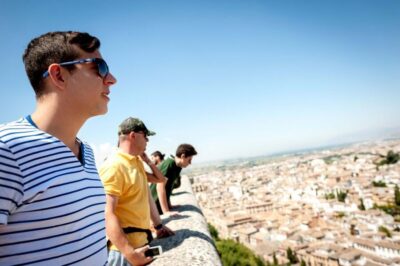
Fast-Track Alhambra & Nasrid Palaces Guided Tour
Read our review →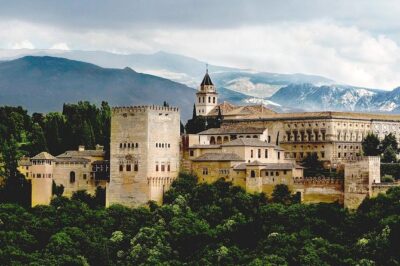
Skip The Line Alhambra and Generalife Guided Tour
Read our review →
Alhambra Ticket and Guided Tour with Nasrid Palaces
Read our review →
Albaicín and Sacromonte Guided Sunset Walking Tour
Read our review →