
Reviewed · ALBAICíN & SACROMONTE WALKING TOURS
Granada: Albaicin and Sacromonte Evening Walking Tour
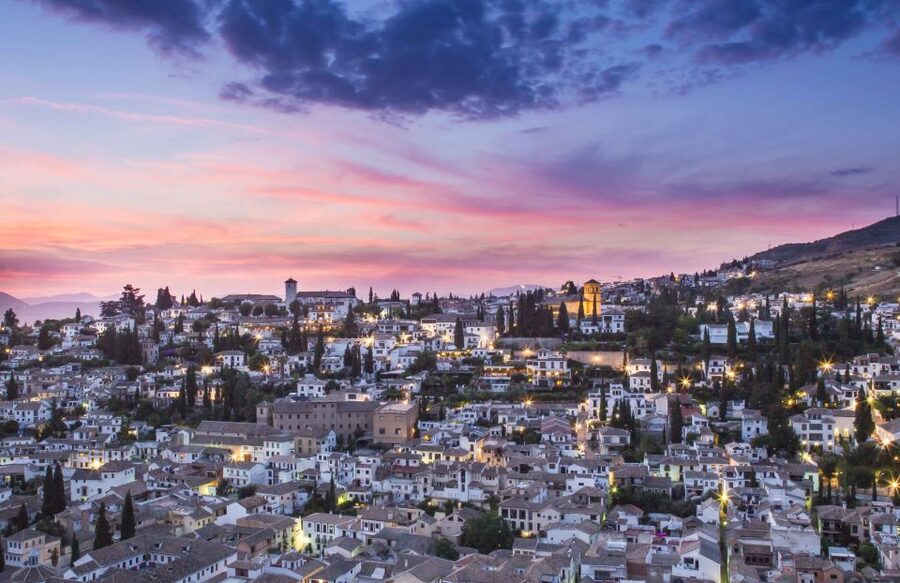
Granada looks its best as daylight fades. This 2.5-hour walk winds through the Albaicin’s white lanes and the cave quarter of Sacromonte, then pauses at San Nicolas for views of the Alhambra and the city lights. You get old walls, flowered balconies, flamenco country, and stories of the last Muslim kingdom in Iberia in one evening.
I like the route’s excellent sunset timing, and I like the way it connects famous views with everyday neighborhoods rather than simply circling a monument. Guides such as Carmen, Fernando, Patricia, and Paula are praised for making the history easy to follow and personal. The catch is clear: this is a hilly walk with stairs, and there are no toilet stops.
Key points to know before booking
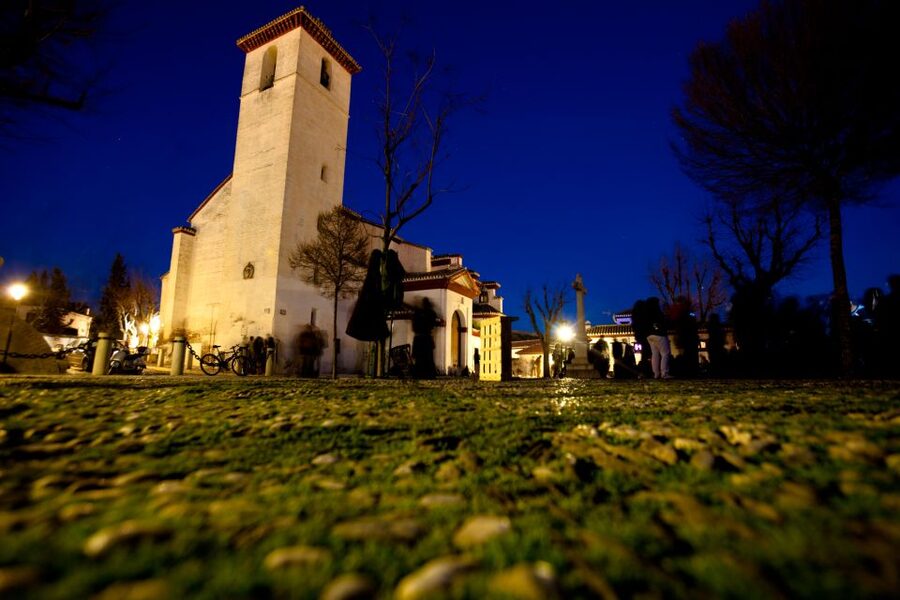
- Sunset at San Nicolas: The stop is timed for changing light over the Alhambra, Granada, and the surrounding hills.
- Two very different districts: Albaicin brings Moorish lanes and old city walls, while Sacromonte explains cave homes, gypsy culture, and flamenco traditions.
- A small-price introduction: At $18, the tour offers 2.5 hours of guiding without transport or meals.
- Uphill from start to finish: Comfortable shoes are essential, and this is not suitable for wheelchair users or people with mobility problems.
- Several guide languages: Tours are offered in English, Spanish, or French.
- A strong first-night choice: The route gives you a useful sense of direction and points out places you can return to later.
Why an evening walk works so well in Granada
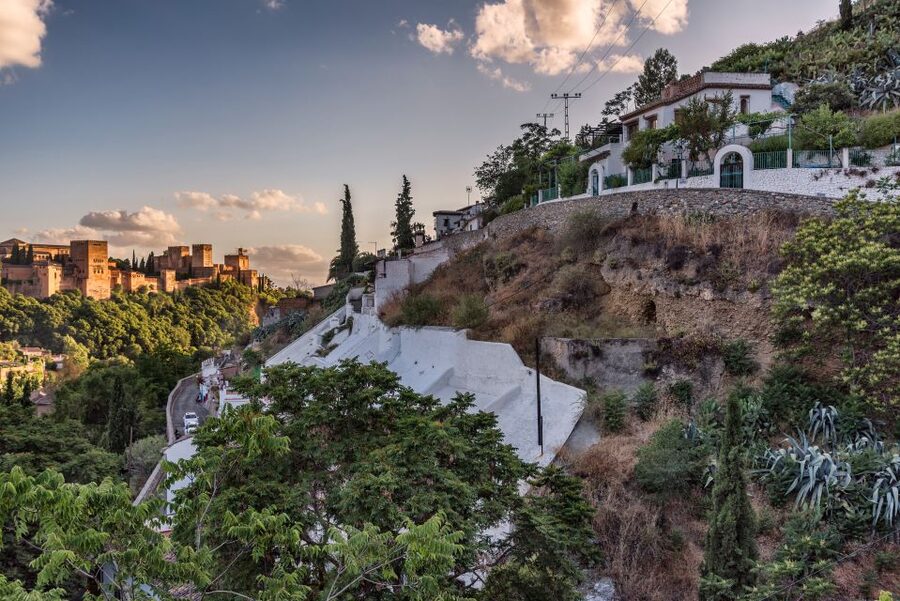
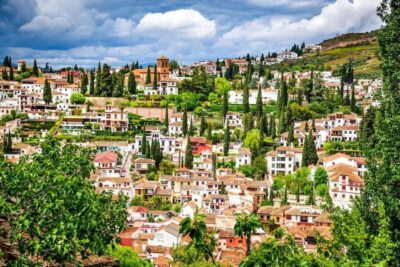
Granada is a city best understood on foot. Its two historic hill districts are full of narrow turns, steep lanes, old gates, and small plazas that make little sense from a vehicle. In the evening, the whitewashed buildings catch the last sun, the Alhambra begins to glow, and the old walls take on a more dramatic look under floodlights.
The timing also helps with the heat. One August participant found the tour pleasantly cool by the time it began, while summer sunset walks still allowed time for photographs. In July, the route was described as a slow conversation through the neighborhoods, with the guide stopping for questions instead of rushing from point to point.
You should not expect a museum visit or an interior tour of the Alhambra. The value comes from the setting, the explanations, and the way the guide links the streets to Granada’s past and present. Think of this as a walking introduction, not a substitute for a full Alhambra visit.
More walks through the Albaicin and Sacromonte:
- Granada: Albaicín and Sacromonte Guided Sunset Walking Tour
★ 4.9 · 2,962 reviews - Sacromonte: Flamenco Show at Cuevas Los Tarantos Tickets
★ 4.5 · 2,051 reviews - Albaicin & Sacramonte Electric Bike Tour in Granada
★ 5.0 · 1,044 reviews
Starting at Plaza Isabel la Católica
The meeting point is Isabel la Católica Square, behind the monument showing Queen Isabella I and Christopher Columbus. This is a central and easy-to-identify place, but give yourself a few minutes to find the correct side of the monument.
From here, the guide sets the story in motion. Granada’s history includes the final Muslim kingdom of Iberia, the Christian conquest, the Spanish Inquisition, and the later development of Albaicin and Sacromonte. The best guides, including Carmen and Fernando, are praised for explaining these changes in a way that connects politics with ordinary life.
The group returns to this square at the end. Since transportation is not included, you arrange your own way to the meeting point and back. The route itself is done on foot.
La Calderería and the first Moorish lanes
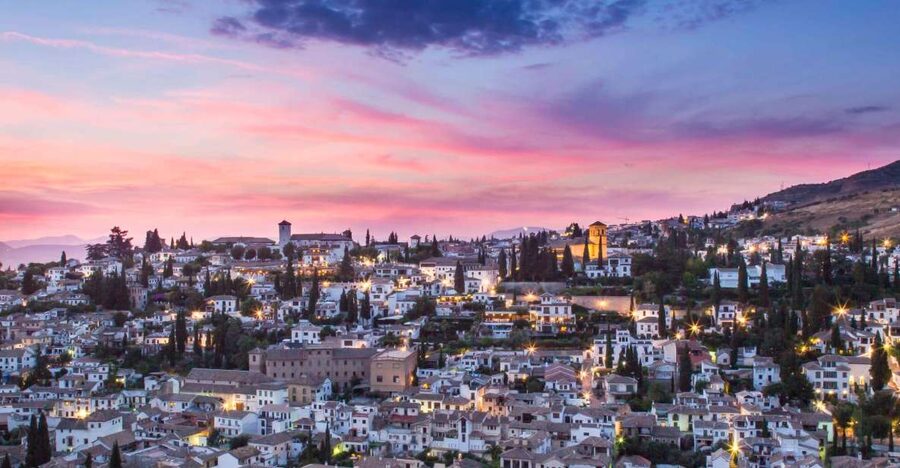
The walk moves toward La Calderería, a narrow quarter known for its strong Moorish character. You pass through lanes that feel far removed from the broad streets below. This is where the tour begins to show why Granada cannot be grasped from a map alone.
Expect close-set white buildings, small shops and tea-house surroundings, and lanes that twist rather than run in straight lines. The guide explains how the Albaicin developed and points out details you might miss on your own. The scheduled visit here is brief, but the neighborhood forms the tone for much of the evening.
The pavement can be uneven, and the streets rise quickly. Keep your phone and camera handy, but do not let photography slow you down on the narrowest stretches.
Plaza San Miguel Bajo and Albaicin’s quieter side
Plaza San Miguel Bajo offers a more open pause after the tight lanes of La Calderería. The square helps you understand the way Albaicin is arranged, with small public spaces opening between the crowded medieval streets.
This part of the route is useful for orientation. You begin to see the district as a living neighborhood rather than a collection of scenic alleys. Guides explain the area’s Muslim foundations and the changes that followed Christian rule. The conversation can cover architecture, local customs, and the people who have lived here over the centuries.
The walk continues uphill, so this is a good time to drink water. The route is not described as a strenuous hike, but the repeated climbs add up.
More evening tours in Granada:
- Granada: Alhambra Night Visit Entry Ticket
★ 3.5 · 478 reviews - Golden Hour in Granada: Sunset Walking Tour with Play Granada
★ 5.0 · 379 reviews - Granada: Alhambra and Nasrid Palaces Guided Tour at Night
★ 4.9 · 284 reviews - Night Adventure Tour, Play Granada Original
★ 5.0 · 224 reviews
San Nicolas, the evening’s big view
San Nicolas is the high point for many people. The tour makes a longer stop here, giving you time to photograph the Alhambra, watch the sunset, and see Granada change from day to night.
The view is the reason many people choose this walk. On clear evenings, the Alhambra sits across the valley, with the Sierra Nevada area beyond it. As the light drops, the palace complex and city lights become the focus. One useful advantage of a guided visit is that the guide may lead you to viewpoints that are less crowded than the most obvious spot.
Timing can vary with the season. A January tour may begin early enough for sunset, while a summer tour benefits from the cooler air after the hottest part of the day. If the view matters most to you, check the departure time when booking and be ready to adjust your expectations to the season.
San Nicolas can be busy. The guide cannot control the crowd, but a local guide can help you find a better angle and explain what you are seeing. Bring a camera, but also give yourself a few quiet minutes to take in the view without trying to record every second.
Arco de las Pesas and Plaza Larga
After San Nicolas, the route continues through the old entrance area of Arco de las Pesas. This gate is part of Albaicin’s medieval defenses and gives the guide a chance to explain how the quarter was protected and connected to the wider city.
The stop is short, but it adds useful context. Without it, Albaicin can seem like a pretty maze of white houses. With the old gate and walls pointed out, the neighborhood becomes easier to read as a former fortified Muslim district.
At Plaza Larga, the streets open again. This is another chance to pause, catch your breath, and see how local life fits into the historic setting. The plaza is not a major monument, but it helps balance the famous viewpoints with ordinary places where the district functions day to day.
Sacromonte and its cave homes
The route then heads into Sacromonte, Granada’s traditional gypsy and flamenco quarter. The change in character is one of the best reasons to choose this tour instead of taking a simple viewpoint walk.
Here, the guide explains why people settled in caves cut into the mountainside and how these homes became part of Sacromonte’s identity. You learn about gypsy life, local customs, and the district’s connection with flamenco. The goal is not to turn the neighborhood into a stage set. It is to explain why this unusual form of housing developed and how the area became known.
The cave dwellings are the key sight, but the climb is also the key difficulty. A past participant described the route as a pleasant hike with many stairs, while another found the climbing hard going at an older age. You should take that warning seriously. Wear shoes with a firm grip, carry water, and do not book this walk if steep streets are a serious problem.
The guide usually controls the pace and allows short pauses. Aditya’s group appreciated a guide who watched each person’s speed, and Ingrid specifically noted the pause moments and public fountains along the way. Still, the walking remains uphill and cannot be made flat by a gentle pace.
Cuesta del Chapiz and the route downhill
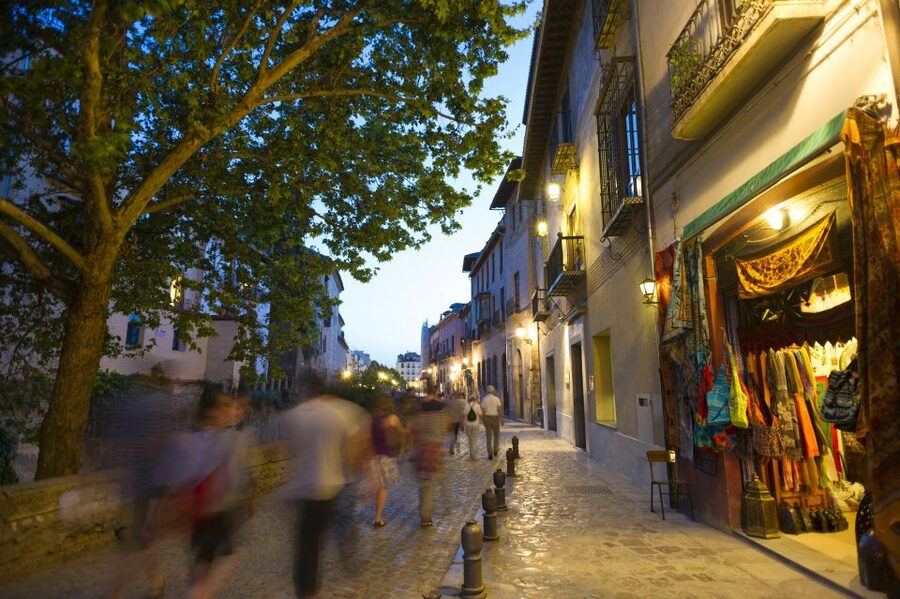
Cuesta del Chapiz connects Sacromonte with the lower parts of Granada. The road offers another sense of how the hill districts join together, and the guide can point out the transition between the cave quarter, Albaicin, and the streets below.
By this stage, your legs will know you have been climbing. The route begins to feel more manageable as it drops toward the river, but you still need to watch your footing. This is not the place for smooth-soled shoes or a hurried pace.
Paseo de los Tristes beside the Darro
Paseo de los Tristes is one of Granada’s most atmospheric places, with the Darro River and the Alhambra rising above the route. The evening light makes this a fine photography stop, especially after the higher views from San Nicolas.
The atmosphere changes here. Albaicin and Sacromonte feel steep and enclosed; Paseo de los Tristes is longer, lower, and more open. It gives you a chance to look back at the hills you have crossed and understand the position of the neighborhoods in relation to the river and palace.
The stop is long enough for photos and explanation. Do not expect a quiet private walkway, since it is a well-known part of central Granada. The guide adds value by pointing out what sits above and around you and by tying the street back to the city’s changing history.
Carrera del Darro and Plaza Nueva
Carrera del Darro follows the river through one of Granada’s most attractive central streets. Old buildings, bridges, and the slopes of the Alhambra area frame the walk. After the narrow upper lanes, this section feels like a gradual return to the city below.
The final stop is Plaza Nueva, a natural place to finish the main route before returning to Isabel la Católica Square. You are back among central streets, restaurants, and onward connections, but the guide brings the story full circle by linking the hill quarters with the modern city.
The return walk makes the tour longer than a simple one-way climb. That is helpful if you want an overview, but it also means you should avoid scheduling a late dinner or another fixed activity immediately afterward. The stated duration is 2.5 hours, though one participant found the walk closer to two to three hours.
What $18 buys you
At $18 per person, this is good value if you want context rather than just directions to a viewpoint. You receive 2.5 hours with an official guide and cover two of Granada’s most distinctive districts. The price does not include transport, food, drinks, or entry to monuments, so you are paying for the guided walk and local interpretation.
That is a sensible trade for a first evening. A guide can explain why the streets are built as they are, what the old gates meant, and why Sacromonte’s caves became homes. You also avoid spending your first night trying to find San Nicolas, Sacromonte, and the river route by yourself.
The value drops if you dislike group walks or already know Albaicin and Sacromonte well. It also drops if you cannot manage hills. You may see the same streets without paying for a guide, but you will lose the historical links and local stories that make the route more than a scenic climb.
Group size can vary. Some walks have been intimate, with only five people, while another had about 15 participants. Smaller groups make questions easier and help the guide keep everyone together. Larger groups may take longer at viewpoints, though the route still appears to be paced with regular pauses.
Guides and the quality of the storytelling
The guide matters a great deal on this experience. Names praised for clear, warm guiding include Carmen, Fernando, Patricia, Paula, Maria, Sergio, Anna, Marta, Andrea, and Chema. The strongest descriptions point to guides who answer questions, adjust their pace, and mix major events with details about present-day life.
Carmen is especially associated with sunset timing, personal explanations, and a relaxed conversational style. Fernando is noted for combining historical information with local details and managing the uphill pace well. Patricia is praised for finding viewpoints that avoid some of the crowds.
The exact guide is not guaranteed, so book this for the route and format rather than for one named person. Still, the repeated pattern is encouraging: the experience works best when you ask questions. Bring up Muslim rule, the Christian conquest, the Inquisition, flamenco, or cave living, and the walk has plenty of material to work with.
The tour is offered in English, Spanish, and French. Check the language and starting time when you reserve.
Who should take this walk
I would recommend it to a first-time visitor who wants a clear introduction to Granada on the first evening. It gives you a mental map of Albaicin, Sacromonte, the river, and the main central squares. You can then return to the places that interest you most in daylight.
It also suits photographers and anyone who values sunset views. San Nicolas and Paseo de los Tristes provide two different ways to see the Alhambra, and the old streets offer plenty of smaller scenes along the way.
History fans will appreciate the mix of Muslim Granada, Christian rule, local legends, and gypsy culture. The tour is not an academic lecture, but it gives you enough background to understand later visits to the Alhambra and other monuments.
I would hesitate to recommend it to anyone with limited mobility, serious knee or hip trouble, or little tolerance for stairs. It is not wheelchair accessible, large bags are not allowed, and there are no toilet stops. Comfortable shoes are not a minor suggestion here. They are part of the basic equipment.
My booking advice
Book this walk if you want a low-cost, guided introduction with a strong sunset view and you are comfortable walking uphill for most of the evening. Choose a departure time that reaches San Nicolas near sunset, and leave your schedule open after the stated 2.5 hours.
Skip it if your priority is indoor sightseeing, a flat route, or a private experience. The tour does not enter the Alhambra or provide transport, and the hills are real. For the right walker, though, it offers a lot for $18: two historic quarters, old walls and gates, cave homes, local stories, and some of Granada’s finest nighttime views.
FAQ
Where does the Granada walking tour start?
It starts at Isabel la Católica Square, 18009 Granada, behind the Monument of the Capitulations showing Queen Isabella I and Christopher Columbus.
How long does the tour last?
The stated duration is 2.5 hours. One participant found the walk lasted closer to two to three hours, so avoid booking another activity immediately afterward.
Which languages are available?
The live guide can lead the tour in English, Spanish, or French.
Is transportation included?
No. This is a walking tour, and transportation and meals are not included.
Is the tour suitable for wheelchair users?
No. The tour is not wheelchair accessible and takes place in a hilly area with uphill walking and stairs.
What should I wear or bring?
Wear comfortable shoes suitable for hills and uneven streets. Large bags and luggage are not allowed, and there are no toilet stops during the route.
More Evening Experiences in Granada
- Granada: Alhambra and Sierra Nevada Sunset Views by E-Bike
★ 5.0 · 107 reviews - Alhambra: Night Visit to Nasrid Palaces
★ 3.5 · 101 reviews - Sunset Walking Tour in Albaicín & Sacromonte
★ 5.0 · 95 reviews - Alhambra Day or Night Private Tour
★ 5.0 · 67 reviews
More Walking Tours in Granada
- Guided Walking Tour of the Alhambra in Granada
★ 4.0 · 863 reviews - Granada: Albaicín and Sacromonte 2.5-Hour Walking Tour
★ 4.7 · 777 reviews - Granada: Albaicín and Sacromonte Walking Tour
★ 4.5 · 665 reviews - Granada’s Hidden Treasures: Albayzin and Sacromonte Walking Tour
★ 4.5 · 575 reviews
Just added around Granada
- Granada: Authentic and intimate Flamenco Show with Snacks★ 4.2 · 9 reviews
- Flamenco Show in the Caves of Sacromonte★ 4.5 · 26 reviews
- From Granada: Day Trip to Trevélez with Ham Factory★ 4.6 · 12 reviews
- Water paths. Private adventure and history tour★ 5.0 · 6 reviews
- Guided tour Granada Unexplained★ 5.0 · 5 reviews
- Albaicín and Sacromonte Sunset tour + Flamenco show★ 5.0 · 11 reviews
- Albaicin guided tour with dogs★ 5.0 · 6 reviews
- Guided tour Conspiracy in the Albaicín★ 5.0 · 6 reviews
Albaicín & Sacromonte Walking Tours, compared.
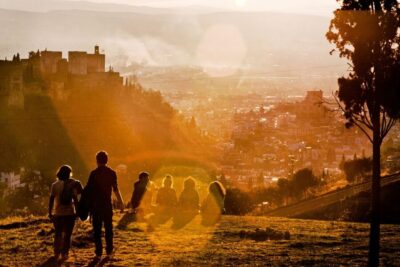
Albaicín and Sacromonte Guided Sunset Walking Tour
Read our review →
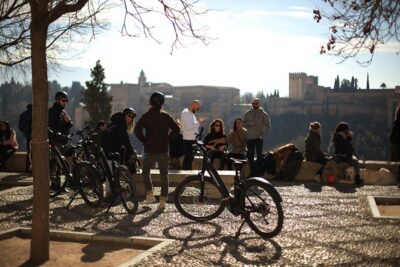
Albaicin & Sacramonte Electric Bike Tour in Granada
Read our review →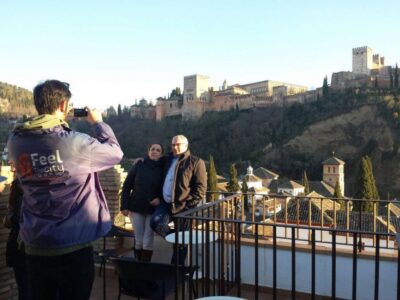

Granada’s Hidden Treasures: Albayzin and Sacromonte Walking Tour
Read our review →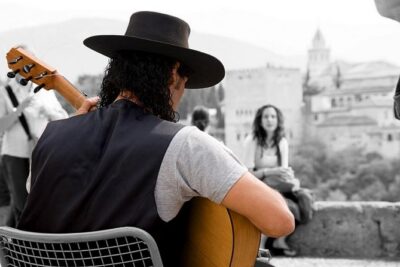
Albayzín y Sacromonte, Unesco Heritage Neighborhoods
Read our review →Browse the lists this tour appears in