
Reviewed · GRANADA LEGENDS & MYSTERIES TOURS
Exhibition Inquisition Instruments of Torture in Granada
The most striking part of this small Granada museum is its setting. The Palacio de los Olvidados is a restored 16th-century palace on the Darro River, below the Alhambra and in the lower Albaicín. Inside, you see instruments linked to torture and capital punishment used by ecclesiastical and civil courts across Europe.
I like the low $9 price and the easy format. You can fit the visit into a walk through the Albaicín without giving up half a day, and the final viewpoint adds something beyond a room of grim machinery. The main drawback is its size: plan on roughly 30 minutes, and do not expect a full museum devoted to the wider history of the Inquisition.
Key points to know before you go
- A 16th-century palace sets the scene: The exhibition occupies the restored Palacio de los Olvidados near the Darro River.
- The visit is short: Most people can finish in about 30 minutes, though the stated duration ranges from 1 to 40 minutes.
- The collection focuses on devices: You will see instruments of torture and execution, with less space devoted to historical explanation.
- The location works well with an Albaicín walk: The palace sits at the foot of the Alhambra in one of Granada’s oldest districts.
- A viewpoint finishes the visit: You can look toward the Alhambra after seeing the exhibition.
- Booking is flexible: Your mobile ticket includes admission and all fees, with free cancellation up to 24 hours before the start time.
Entering the Palacio de los Olvidados
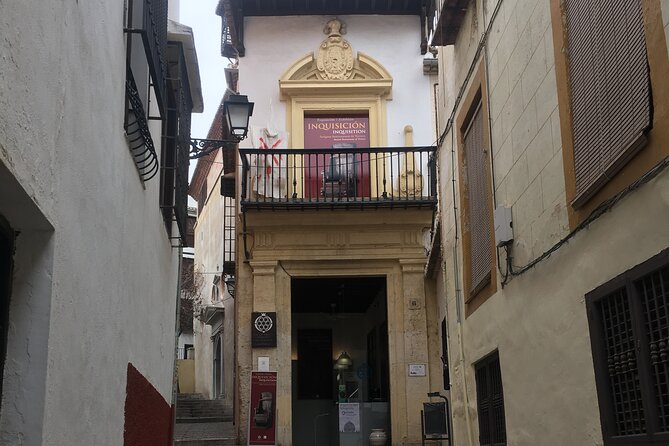
Granada has no shortage of dramatic places, but this one is easy to miss if you rush from the Albaicín toward the Alhambra. The Palacio de los Olvidados sits on the Cuesta de Santa Inés, near the Darro River. Its location puts you in the lower Albaicín, a district shaped by Arab, Sephardic, and Christian cultures.
The building itself is part of the appeal. This is a restored palace from the 16th century, not a modern gallery dropped into an unrelated part of town. Narrow streets and old buildings surround it, giving the visit a clear sense of place before you even reach the exhibition rooms.
You should think of this as a compact stop rather than a major museum outing. The advertised duration ranges from 1 to 40 minutes, and about 30 minutes is a sensible plan. That makes it useful between larger Granada sights, especially if you are already walking along the Darro or exploring the Albaicín.
The mobile ticket keeps entry simple. Confirmation is provided when you book, and admission includes all fees. There is no private transportation, so you reach the palace on your own using Granada’s streets and public transport connections.
More legends and mysteries walks in Granada:
- Alhambra Private Tour: Secrets of the Alhambra
★ 5.0 · 121 reviews - Alhambra Small Group Tour: Secrets of the Alhambra
★ 5.0 · 107 reviews - Private Tour Legends of Granada and Albaicín (Spanish language)
★ 5.0 · 37 reviews
What the torture exhibition actually shows
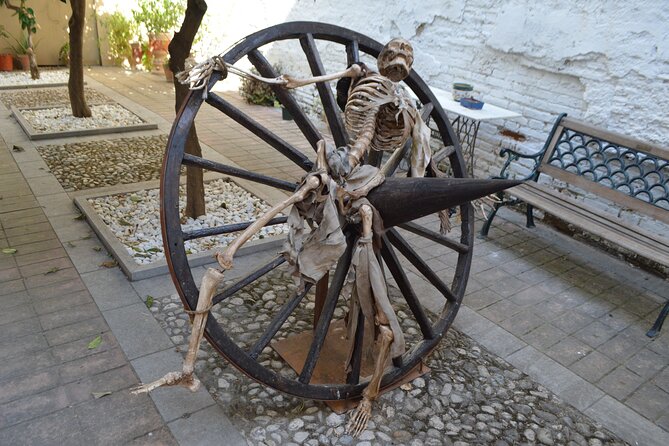
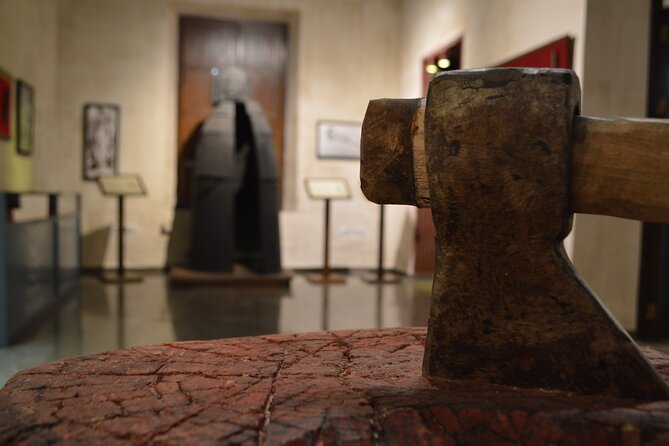
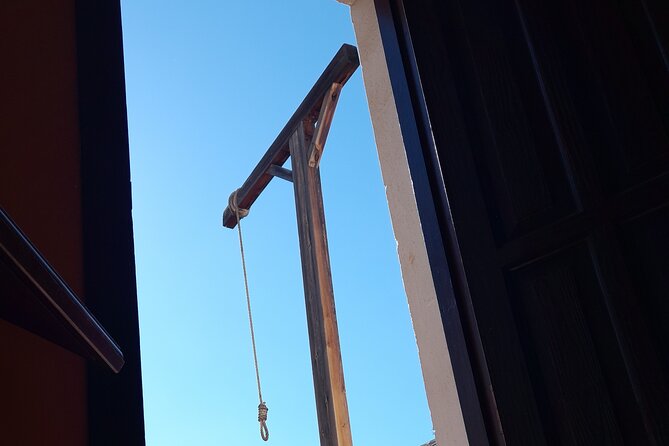
The permanent exhibition presents a selection of instruments connected with torture and capital punishment. These devices were used by different inquisitorial courts, both religious and civil, across Europe.
That wording matters. The display is not simply a collection of objects associated with the Spanish Inquisition. It also places attention on civil courts, which used severe punishment against groups that authorities considered dangerous to social order. The exhibition therefore points to a wider European practice, not just one institution in Spain.
You will see examples associated with methods such as the garrucha, the guitar, and the rack. The exhibition explains that Spanish ecclesiastical courts used torture sparingly, with these devices among the main instruments employed. Much of the harsher material on display comes from civil courts in Spain and elsewhere in Europe.
This distinction gives the collection more historical value than a simple room of frightening objects. It reminds you that torture was tied to systems of law and authority, not only to isolated acts of cruelty. Still, the visit puts the devices first. If you want a long account of religious conflict, court procedure, or the development of the Inquisition, you may find the historical background limited.
The machines can be difficult to look at, even when they are presented as historical artifacts. The subject is grim, and the exhibition is best approached with a clear understanding of what you are going to see. This is not a light family attraction, though most travelers can participate.
Why the short length can be a strength
A brief museum visit is not always a weakness. In Granada, where you may already be planning the Alhambra, the Cathedral, the Royal Chapel, and long walks through the Albaicín, a 30-minute stop can fit neatly into your day.
I like the fact that you do not need to build a full afternoon around it. The $9 admission is modest, and the visit is short enough to suit people who want one focused subject rather than another large collection. You can spend time with the exhibits, move on to the viewpoint, and continue exploring the neighborhood.
The tradeoff is clear. If you judge value by the number of rooms or the amount of written interpretation, the museum may feel small. One available assessment described it as brief but interesting and noted that more history of the Inquisition would have improved the experience. That is a fair expectation to carry with you.
The best way to view the museum is as a compact historical stop with a strong theme. It works particularly well for curious adults, students of European history, and anyone who wants something different from Granada’s usual palace and church visits.
The palace location below the Alhambra
The Palacio de los Olvidados is at the foot of the Alhambra, on the banks of the Darro. You are also in the lower Albaicín, a district declared a UNESCO World Heritage Site in 1984.
That setting adds useful context. The Albaicín is not just a scenic quarter of steep lanes. It preserves traces of several cultures that shaped Granada, including Arab, Sephardic, and Christian communities. Walking to the palace gives you a sense of the old city’s layered character.
The approach may require attention to the streets. The area is described as narrow and steep, so wear comfortable shoes and allow time to walk rather than treating the museum as a roadside stop. Public transportation is nearby, but private transportation is not included.
If you are already visiting the Alhambra, remember that this exhibition is not inside the Alhambra complex. It is a separate attraction below the palace, in the Albaicín. That makes it a useful addition to a city walk, but it does not replace an Alhambra ticket or provide access to the Alhambra itself.
More museums and sites in Granada:
- Granada: Albaicín, Sacromonte & Museum of Caves Walking Tour
★ 4.9 · 244 reviews
Finishing with the Alhambra viewpoint
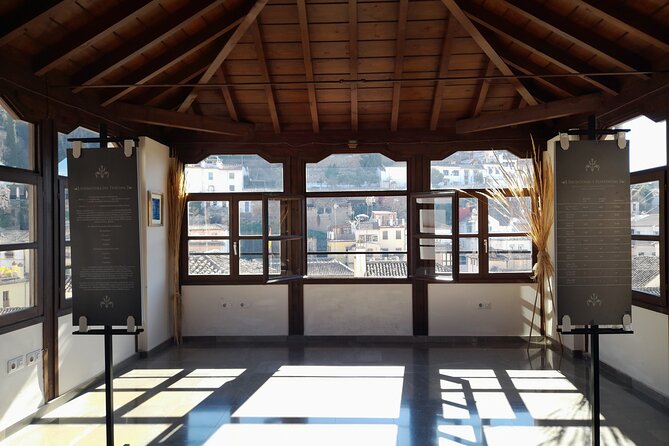
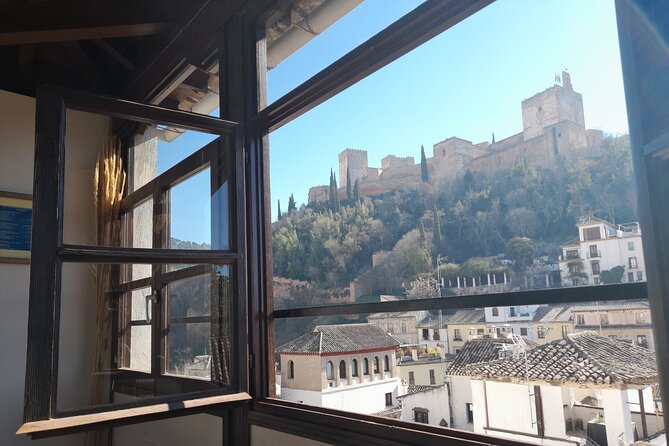
The final viewpoint is an important part of the visit. After the dark subject of the exhibition, you can look out toward the Alhambra from the palace.
The supplied information does not specify the exact viewing platform, its size, or the length of time you should spend there. Still, the viewpoint gives the visit a more balanced finish. You move from enclosed rooms and grim objects to one of Granada’s defining sights.
This is also where the location earns its $9 price a little more. If the exhibition alone feels too short, the palace setting and the view give you another reason to stop. You should not book it solely as an Alhambra viewpoint, though. The main purpose is the torture exhibition, with the view as a useful extra.
How much value do you get for $9?
At $9, this is a low-cost attraction by Granada standards. The ticket includes admission and all fees, with no separate charge listed for the viewpoint or the exhibition.
The strongest value comes from combining three things in one short stop:
- A restored 16th-century palace
- A focused collection of torture and execution devices
- A view toward the Alhambra
The price is easier to justify if you are already in the Albaicín or walking beside the Darro. If you must make a special trip across the city only for the exhibition, its small size may feel less satisfying.
I would not compare this with a large national museum. Compare it with a compact historic attraction that fills part of an afternoon and gives you a subject you will not find in every Granada itinerary. For $9, that is a reasonable deal, as long as you accept the limited duration and the narrow focus.
Who should visit this Granada attraction?
This experience suits you if you like difficult subjects, historic buildings, and short independent visits. It can also work for people who have already seen Granada’s main landmarks and want a less familiar stop.
You may especially enjoy it if you are:
- Exploring the Albaicín on foot
- Interested in European legal and religious history
- Looking for a short indoor activity
- Traveling on a modest sightseeing budget
- Curious about historical punishment and court practices
You may want to skip it if torture displays make you uncomfortable or if you are looking for detailed scholarship on the Spanish Inquisition. The exhibition gives you objects and context, but not a full academic treatment.
No guide names are provided, and the experience is described as an admission visit rather than a guided tour. That means you should not book it expecting a scheduled historian-led walk or a long lecture. The independent format lets you set your own pace, but the amount of explanation available may be limited.
Practical details for planning your visit
The palace is open daily from 10:30 a.m. to 7 p.m. The listed opening schedule covers September 15, 2023 through May 31, 2025, and June 1, 2025 through May 31, 2026, with the same hours in both periods.
You receive a mobile ticket, so you can keep the booking on your phone. Confirmation arrives at the time of booking. Service animals are allowed, and most people can participate.
Try to place the visit alongside other Albaicín sightseeing rather than treating it as an isolated destination. The lower Albaicín, the Darro River, and the foot of the Alhambra give you plenty of surrounding atmosphere, even though the exhibition itself is short.
For cancellation, you receive a full refund if you cancel at least 24 hours before the experience begins. Cancellations or changes made within 24 hours are not accepted for a refund, and the cut-off follows local time.
Should you book the Palacio de los Olvidados?
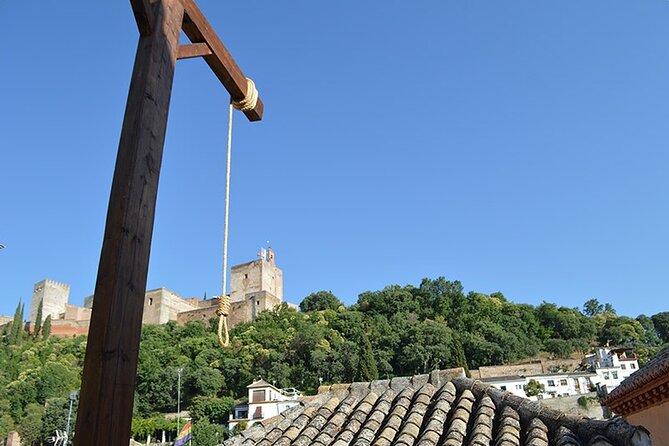
Book it if you want a short, inexpensive look at torture and execution practices in a historic Granada palace. The restored building, Albaicín location, and Alhambra viewpoint make the visit more appealing than a stand-alone display of objects.
Skip it if you need a large museum, extensive written history, or a guided explanation of the Inquisition. The exhibition is compact, and about 30 minutes is enough for most visits.
My advice is simple: add it to an Albaicín walking day, not to a day built around the Alhambra alone. At $9, it offers a focused subject, a historic setting, and a useful viewpoint without taking much time.
FAQ
Where is the Inquisition Instruments of Torture exhibition?
It is located at the Palacio de los Olvidados on the Cuesta de Santa Inés, in the lower Albaicín of Granada, near the Darro River and below the Alhambra.
How long does the visit take?
The listed duration ranges from 1 to 40 minutes. Allowing about 30 minutes is a practical plan for seeing the exhibition and the viewpoint.
How much does admission cost?
The ticket costs $9. All fees and taxes are included.
What does the exhibition display?
It presents a selection of instruments used for torture and capital punishment by ecclesiastical and civil courts across Europe. Examples include the garrucha, the guitar, and the rack.
Is transportation included?
No. Private transportation is not included, though the attraction is near public transportation.
What are the opening hours?
The exhibition is open Monday through Sunday from 10:30 a.m. to 7 p.m. The listed schedules for both date periods use these same hours.
Can I cancel my booking for a refund?
Yes. You can receive a full refund if you cancel at least 24 hours before the experience starts. Cancellations or changes made less than 24 hours before the start time are not refunded.
Just added around Granada
- Granada: Authentic and intimate Flamenco Show with Snacks★ 4.2 · 9 reviews
- Water paths. Private adventure and history tour★ 5.0 · 6 reviews
- Flamenco Show in the Caves of Sacromonte★ 4.5 · 26 reviews
- From Granada: Day Trip to Trevélez with Ham Factory★ 4.6 · 12 reviews
- Guided tour Granada Unexplained★ 5.0 · 5 reviews
- Albaicín and Sacromonte Sunset tour + Flamenco show★ 5.0 · 11 reviews
- Albaicin guided tour with dogs★ 5.0 · 6 reviews
- Guided tour Conspiracy in the Albaicín★ 5.0 · 6 reviews
Granada Legends & Mysteries Tours, compared.
Alhambra Private Tour: Secrets of the Alhambra
Read our review →
Alhambra Small Group Tour: Secrets of the Alhambra
Read our review →
Private Tour Legends of Granada and Albaicín (Spanish language)
Read our review →
Legends of the Alhambra Tour with Tickets Included
Read our review →
Browse the lists this tour appears in