
Reviewed · CITY TOURS
Granada City Train 1 or 2-Day Hop-On Hop-Off Ticket
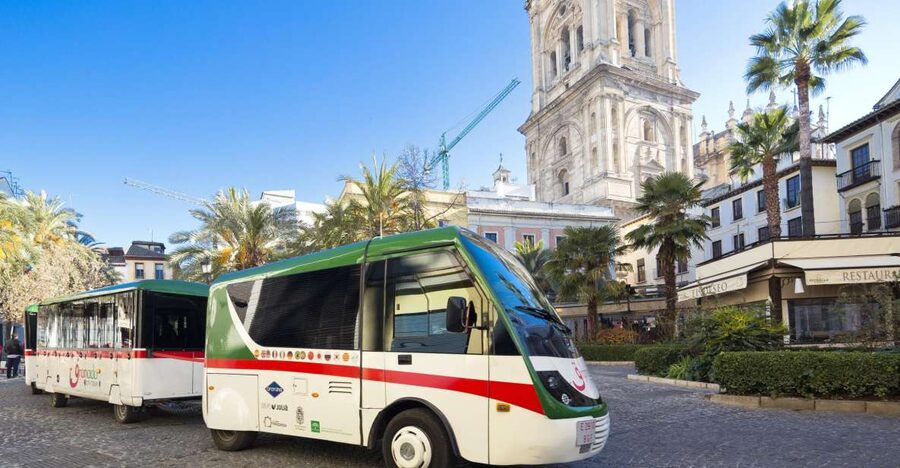
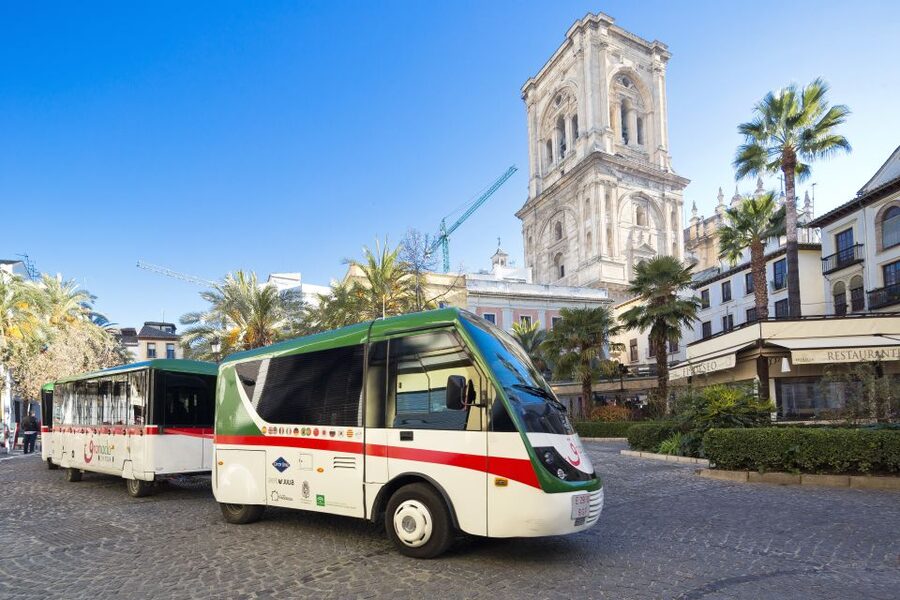
Granada’s city train tackles the city’s steep streets and narrow lanes while giving you a quick look at places that can take hours to reach on foot. I like the easy overview and the direct run to the Alhambra. I also like that you can use the train as sightseeing and transport in one.
The main catch is waiting time. Trains run every 30 to 45 minutes, and busy days can leave you standing at a stop for an hour or more. The ride is also bumpy on old stone streets, so anyone with a sensitive back should plan carefully.
Key points at a glance
- The Alhambra Route reaches the Alhambra: The green line runs to Alhambra Generalife and Puerta de la Justicia.
- Ten named stops cover major sights: You can get near Plaza Nueva, the cathedral, the Albaicín side of town, viewpoints, and historic monuments.
- A full circuit takes about 1.5 hours: Use the first ride to get your bearings before choosing where to get off.
- Audio commentary comes in 12 languages: Bring your own headphones, since they are not included.
- The steep hills become much easier: The train is useful when you want to save your legs, especially on the climb toward the Alhambra.
- Crowds affect the hop-on plan: On busy weekends and holidays, riding the whole route may be wiser than getting off at every stop.
Granada is compact, but it is not flat. The city rises toward the Alhambra and the Albaicín, and several of its most rewarding viewpoints sit above the central streets. The Granada City Tour train gives you a low-cost way to cover those climbs while taking in the city from an open carriage.
You pay about $8 per person for the listed experience, with one-day, two-day, and one-trip options available. That is a small price for a first look at Granada, especially if you want to save your energy for the Alhambra itself.
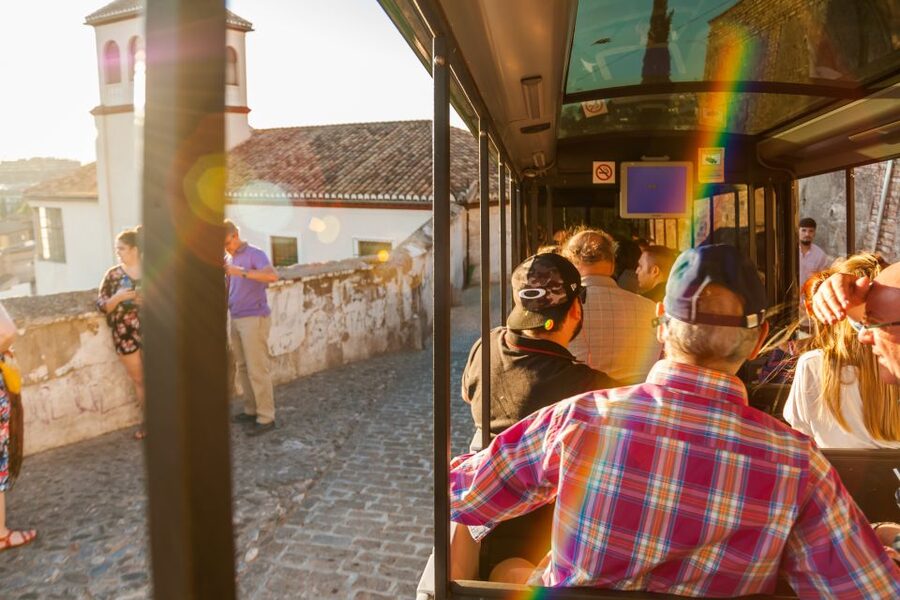
The train is not a polished luxury ride. It rattles over cobblestones, brakes sharply at times, and can feel noisy when the carriage is full. Think of it as a practical sightseeing vehicle that squeezes through streets too narrow for a standard tour bus.
Start at Alhambra Generalife or begin in the center
The official starting point is the ticket office at Stop 1, Alhambra Generalife. The route then connects the Alhambra area with central Granada and several hillside stops.
Starting at the Alhambra is useful if you already have an entry time for the monument. You can ride down after your visit, then get off at Plaza Nueva or the cathedral area. If you are staying in central Granada, you can board at a more convenient stop, but begin by checking the direction and the next departure.
The train runs every 30 to 45 minutes. That sounds frequent enough on paper, but demand changes sharply during holidays, weekends, and the warmer months. A full train may pass before you find a seat, and a long wait can undo the time you hoped to save.
I suggest taking one complete circuit first if your schedule allows. That gives you a useful map of the city and helps you decide which stops deserve your time. If you have only one day, do not spend the entire day trying to hop on and off at every stop. Choose two or three places and use the train with purpose.
Other Granada tours people book alongside this one:
- Granada: Alhambra & Nasrid Palaces Tour with Tickets
★ 4.7 · 19,801 reviews - Granada: Alhambra & Generalife Fast-Track Guided Tour
★ 4.7 · 8,313 reviews - Granada: Alhambra & Gardens Tour w/Nasrid Palaces Option
★ 4.5 · 6,437 reviews
The Alhambra stops: useful transport, not an Alhambra ticket
The route serves Alhambra Generalife, including the ticket office area, and Alhambra at Puerta de la Justicia. This is the most useful part of the service for many visitors because the climb from central Granada is demanding.
You still need a separate Alhambra admission ticket if you plan to enter the palace and grounds. The city train only takes you near the monument. It does not replace timed entry or admission.
The two Alhambra stops are useful for different plans. Generalife is convenient for the ticket office area, while Puerta de la Justicia puts you close to one of the historic entrances. Check your Alhambra ticket details before choosing where to get off.
From Monday through Friday, there is no regular train service toward the Alhambra between 2:00 and 2:30 p.m. Municipal rules close access through the Cuesta del Caidero during that half hour. Build in extra time if you have an afternoon appointment.
Plaza Nueva and the central streets
Plaza Nueva is Granada’s oldest square and one of the best places to pause for coffee. It also makes a practical base for exploring the central streets on foot.
Get off here if you want a break between the Alhambra and the lower city. The square puts you close to walking routes toward the old quarters, and you can return to the train later if the next carriage has space.
This stop is also a good choice for a first orientation. From here, the city feels more walkable than it does from the hills. You can compare the narrow historic lanes with the wider streets around the cathedral and main shopping areas.
The drawback is that Plaza Nueva can be a busy boarding point. If the train arrives full, you may need to wait for the next one. For a tight schedule, use the train to reach the square, then continue on foot rather than counting on a quick return ride.
Alhóndiga and the cathedral area
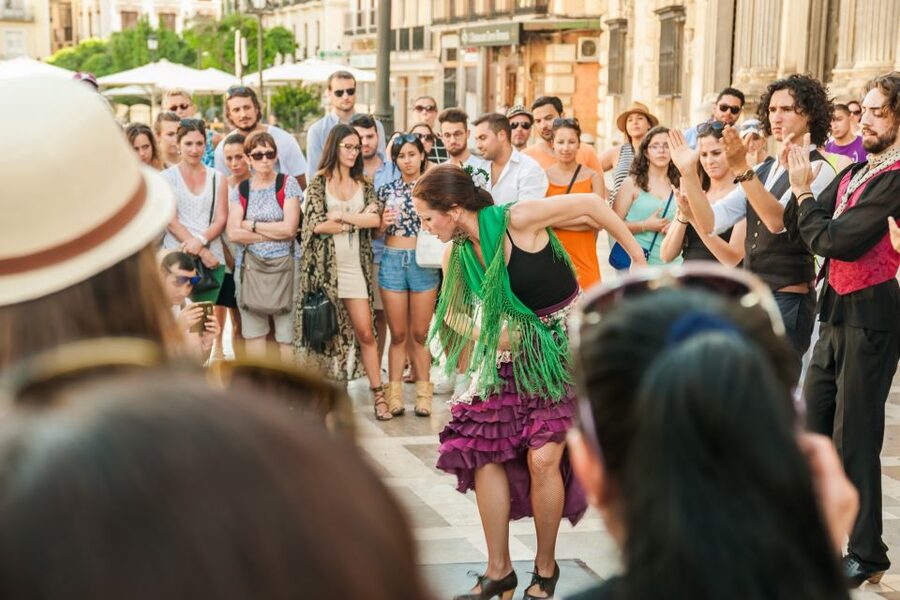
The Alhóndiga stop serves the central area and gives you another option for shopping, cafés, and a break from sightseeing. It is useful if Plaza Nueva is crowded or if you want to split your central visit into shorter walks.
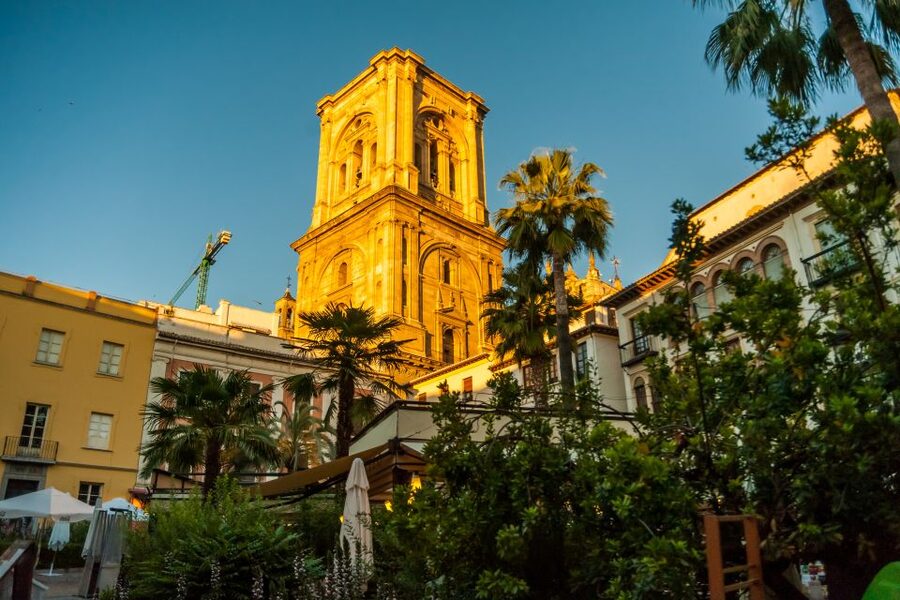
The Catedral and Capilla Real stop is more important for first-time visitors. Granada Cathedral is one of the city’s major landmarks, while the Royal Chapel holds the tombs of Ferdinand and Isabella. The stop lets you combine both sights without making the uphill walk from the Alhambra.
Give yourself enough time here. The train is a good link between monuments, but the attractions themselves require walking and, in some cases, a separate admission fee. Avoid planning a cathedral visit around the exact minute of a scheduled train departure.
A completely different sort of day out in Granada:
- Granada: Alhambra Entry Ticket with Audio Guide
★ 4.1 · 5,950 reviews - Fast-Track Alhambra & Nasrid Palaces Guided Tour
★ 4.7 · 4,379 reviews - Skip The Line Alhambra and Generalife Guided Tour
★ 4.0 · 3,825 reviews - Granada: Alhambra Ticket and Guided Tour with Nasrid Palaces
★ 4.7 · 3,496 reviews
Mirador de San Cristóbal and Jardines de Zoraya
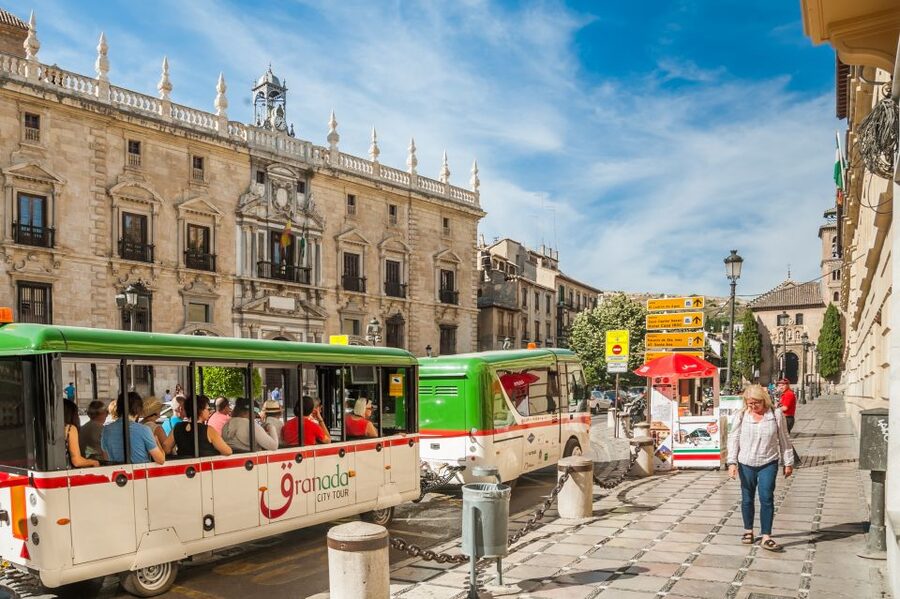
The Mirador de San Cristóbal and Jardines de Zoraya stop offers one of the route’s most appealing changes of pace. The viewpoint gives you broad views across Granada, while the garden area offers a more relaxed setting.
This is a strong place to get off if you want photographs or a pause away from the central streets. Some passengers use the stop for sunset, and it can be especially worthwhile when the light softens over the city.
You should allow extra time here because the next train may not arrive immediately. The route’s 30 to 45 minute interval matters more when you are waiting at a hilltop stop. Bring water in warm weather and keep your return plan flexible.
Arco de Elvira and Hospital Real

The Arco de Elvira and Hospital Real stop connects two very different sights. The arch recalls Granada’s old city entrances, while Hospital Real is an important historic building near the university area.
This stop is useful for seeing a part of Granada that you could easily skip if you focused only on the Alhambra and cathedral. It also helps show how the city changes from the monument-filled center to quieter institutional streets.
Use the train here as a time saver rather than a replacement for walking. The route gives you the broad picture, but the best details are found after you get off and look around at your own pace.
Calle Reyes Católicos and Plaza Isabel la Católica
This central stop sits near a busy meeting point and provides access to the main commercial streets. Plaza Isabel la Católica is easy to recognize, making it a simple place to board if you are already in the heart of town.
It is a practical stop for splitting your day. You might ride down from the Alhambra, visit the cathedral, walk through the center, and then board again here for another part of the route.
Because this is a central boarding point, expect demand to be higher at popular times. If the train is full, use the delay to walk toward Plaza Nueva or the cathedral area instead of waiting in place.
Calle Molinos and Campo del Príncipe
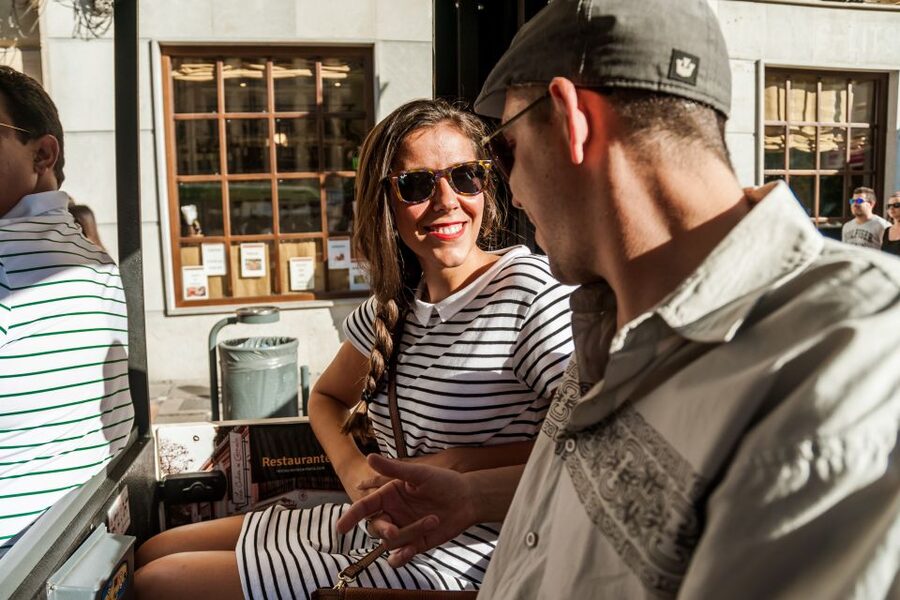
Calle Molinos and Campo del Príncipe take you toward the Realejo area, the old Jewish quarter below the Alhambra. Campo del Príncipe is a pleasant square and a good place to pause for food or a drink.
This stop suits you if you want a neighborhood feel rather than a checklist of major monuments. The route lets you reach the area without tackling the full uphill walk from the center.
The train’s narrow carriage is part of the appeal here. It can use streets that a standard bus cannot, but that also means a slow, bumpy trip with tight turns. Keep loose bags secure and expect sudden braking in confined streets.
Carmen de los Mártires and the upper Alhambra area
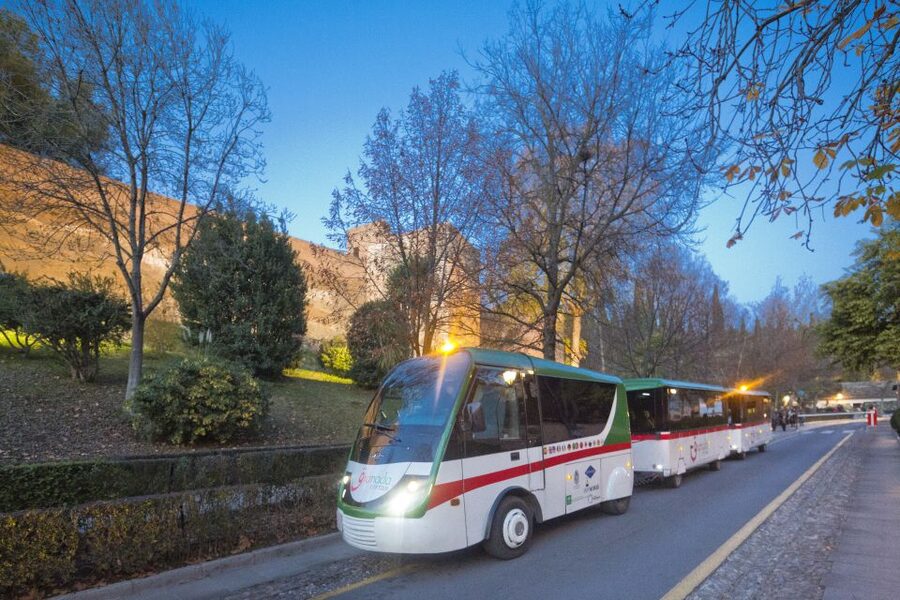
Carmen de los Mártires is near the Alhambra grounds and gives you another way to explore the upper part of the city. A carmen is a traditional Granada house with gardens, and the stop helps you reach a quieter corner near the main monument.
This is a good choice if you want to combine the Alhambra area with gardens and viewpoints. It also makes sense for a two-day ticket, when you can spread out your stops instead of rushing through them.
Remember that the train does not remove the need to walk. The carriages bring you close to sights, but entrances, gardens, and monument interiors still require time on foot.
How the audio guide works
Audio commentary is available in Spanish, Catalan, Chinese, English, French, German, Italian, Japanese, Arabic, Portuguese, Russian, and Korean. It gives you basic context as the train moves between stops.
Bring your own headphones. They are not included, and forgetting them can make the commentary difficult to hear over the vehicle and street noise. Some passengers have found the audio clear and useful, while others have found the train itself noisy.
I would not treat the commentary as a full guided tour. Its main value is helping you identify what you are seeing and giving the route more meaning. For detailed information about the Alhambra, cathedral, or Royal Chapel, you will want the official information at each site.
Drivers and onboard staff can make a big difference. Service has generally been described as friendly and helpful, and one particularly well-liked guide named Jimmy received praise for being professional and informative. Still, the experience is mainly a self-guided ride rather than a live, continuous tour.
One day or two days?
Choose the one-day ticket if you want a city orientation, a ride to the Alhambra, and a few carefully chosen stops. It works well for a short visit, particularly if you ride the full circuit first and then use the train to reach one or two places.
The two-day ticket makes more sense if you plan to use the train as local transport. You can ride the route on your arrival day, stop at the main viewpoints, and return to the Alhambra area or Realejo on the second day.
A one-trip ticket can also be useful. It gives you the full route without committing to repeated boarding. This is the right choice if you mainly want to see Granada from the carriage and decide where to walk afterward.
Do not assume that a two-day ticket guarantees instant boarding. It extends your access, but it does not reserve a seat. On busy days, the practical value depends on your patience and willingness to wait.
Comfort, crowds, and the bumpy ride
The open carriage gives you better views than a closed vehicle, especially on narrow streets and hill routes. It also exposes you to sun, heat, and street noise.
The cobblestones make the ride noticeably rough. Sharp brakes and tight turns can be uncomfortable, especially for anyone with a chronic back problem. If that applies to you, consider using the train for one essential ride rather than spending hours onboard.
Crowding is the biggest practical weakness. At popular stops, many people may be waiting, and a full train can mean a long delay. During a holiday weekend, boarding has taken more than an hour, and some passengers have sensibly ridden the entire route in one go rather than risk being stranded at a stop.
Strollers are allowed if folded and no more than 35 centimeters high and 55 centimeters wide. You will need to fold the stroller before boarding, so measure it first.
The service can also change because of city events, traffic, or conditions outside the operator’s control. Easter and Christmas have special opening hours, including shorter service periods on several listed dates. Check the current schedule before building a timed itinerary around the train.
Is the $8 fare good value?
At about $8 per person, the train is inexpensive for Granada. A single ride can cost less than a short taxi trip, while a one-day ticket gives you a city overview plus access to the hill routes.
The value is strongest if you use the service for both transport and sightseeing. Riding once from the Alhambra to the center is useful, but repeated trips, viewpoint stops, and a second-day return make the ticket work harder.
The fare does not include Alhambra admission, cathedral entry, food, or headphones. Those extra costs are easy to overlook, but they do not change the fact that the train itself is a low-cost way to cover a difficult city.
I would not buy it only because the name suggests unlimited convenience. Crowds and long intervals can limit how many times you actually board. Buy it for the route, the hills, and the first look at Granada, not as a guarantee of quick point-to-point transport.
Who should book the Granada City Train?
I recommend it most to first-time visitors who want to understand Granada’s layout quickly. It also suits anyone who finds steep hills tiring, families who want a simple overview, and visitors with only one day to see the city.
It is less suitable if you want a quiet, smooth ride or prefer to explore every street on foot. The train is noisy and bumpy, and the audio cannot replace time inside the monuments.
I would use this plan:
- Ride the full route once without getting off.
- Pick the Alhambra, cathedral area, and one viewpoint as your main stops.
- Carry headphones and water.
- Leave room for a 30 to 45 minute wait.
- If the train is packed, walk downhill or explore nearby streets instead of waiting too long.
Should you book it?
Book the Granada City Train if you want an affordable overview, need help with the hills, or are visiting for only a short time. The Alhambra connection and central stops give the ticket real practical value, and the open carriage lets you see parts of Granada you might miss underground or inside a taxi.
Skip it if you need guaranteed departure times, a smooth ride, or a detailed live guide. For most visitors, though, a one-day ticket is a sensible first step: ride the circuit, learn the shape of the city, then spend the rest of your time walking where the train has shown you to go.
FAQ
Where does the Granada City Train route start?
The route starts at the ticket office at Stop 1, Alhambra Generalife.
Does the train go to the Alhambra?
Yes. The Alhambra Route, also called the Green Line, stops at Alhambra Generalife and Alhambra at Puerta de la Justicia. The ticket does not include admission to the Alhambra.
How often do the trains run?
Trains generally run every 30 to 45 minutes. Service can be affected by traffic, city events, adverse conditions, or other circumstances outside the operator’s control.
Which languages are available for the audio guide?
Audio commentary is available in Spanish, Catalan, Chinese, English, French, German, Italian, Japanese, Arabic, Portuguese, Russian, and Korean.
Do I need to bring headphones?
Yes. Headphones are not included, so bring your own if you want to use the audio guide.
Can I choose between one-day and two-day access?
Yes. The available options include one-day, two-day, and one-trip tickets. Check the current availability and starting times when booking.
Are baby strollers allowed?
Yes, but the stroller must be folded and must not exceed 35 centimeters in height and 55 centimeters in width.
Just added around Granada
- Granada: Authentic and intimate Flamenco Show with Snacks★ 4.2 · 9 reviews
- Flamenco Show in the Caves of Sacromonte★ 4.5 · 26 reviews
- From Granada: Day Trip to Trevélez with Ham Factory★ 4.6 · 12 reviews
- Water paths. Private adventure and history tour★ 5.0 · 6 reviews
- Guided tour Granada Unexplained★ 5.0 · 5 reviews
- Albaicín and Sacromonte Sunset tour + Flamenco show★ 5.0 · 11 reviews
- Albaicin guided tour with dogs★ 5.0 · 6 reviews
- Guided tour Conspiracy in the Albaicín★ 5.0 · 6 reviews
City Tours, compared.



Alhambra Guided Tour w/ Nasrid Palaces & City Pass
Read our review →
Private Guided Tour to Alhambra with Tickets to City Monuments
Read our review →

Granada Airport to Granada City Private Arrival Transfer
Read our review →Browse the lists this tour appears in