
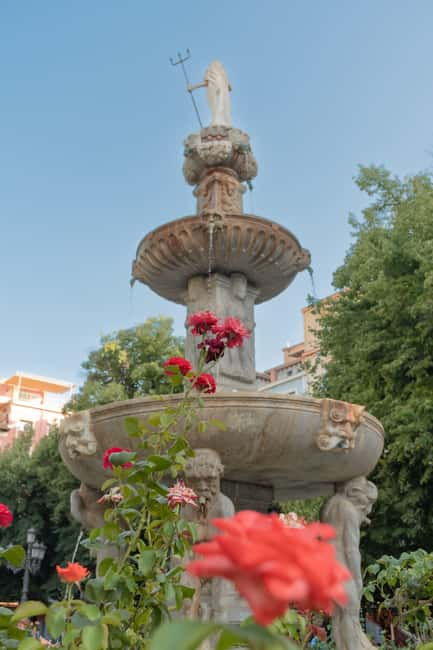
Reviewed · ALBAICíN & SACROMONTE WALKING TOURS
Granada Citycenter&Albayzin
Granada’s best introduction may be a walk that links its Christian monuments with its Islamic past, then climbs into the Albayzín for an Alhambra view. This two-hour tour starts at the statue of Isabel la Católica and finishes at San Nicolás Viewpoint, with the Cathedral, old souk, Carrera del Darro, and Albayzín along the way.
I like the small maximum group of 12, which makes it easier to ask questions, and I like the headset system used for groups of six or more. Guides including Rachel and Rasha have earned praise for being warm, well prepared, punctual, and enthusiastic about Granada. The main drawback is the pace: cobblestones and the uphill walk to San Nicolás can be tiring, and the tour is not suitable for wheelchair users or baby strollers.
Key points at a glance
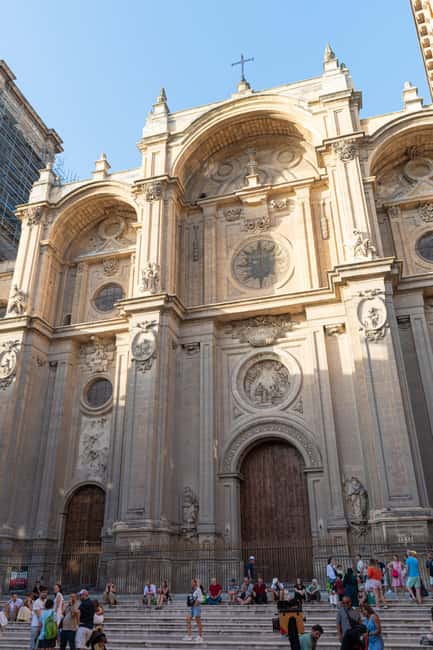
- See Granada beyond the Alhambra: The route connects the Cathedral quarter with the medieval Alcaicería and the old Muslim neighborhood of Albayzín.
- Finish with a classic view: The walk ends at San Nicolás, facing one of Granada’s most famous views toward the Alhambra.
- Small groups help: With no more than 12 people, you get a more personal walk than on a large city tour.
- Headsets keep the commentary clear: Groups of six or more receive headsets, useful on busy streets and in narrow lanes.
- Expect an uphill finish: Carrera del Darro gives way to Albayzín’s steep, twisting streets.
- Good value at $17: The fee covers a guided walk, but monument admission, food, drinks, transport, and hotel pickup cost extra.
Why this Granada walk works as a first orientation
Granada can feel like several cities layered together. You have the Catholic Monarchs’ monuments, the remains of the Nasrid city, an old bazaar, and the whitewashed Albayzín, all within a compact area. This walk gives you a useful framework before you set off on your own.
I especially like the route’s contrast. You begin in the formal center, where grand buildings and broad squares tell the story of Christian Granada. Later, the streets tighten and rise. By the time you reach the Albayzín, the city feels less planned and more maze-like.
The tour lasts two hours, so you should think of it as a guided introduction rather than a full visit to every monument. You will hear about the buildings and neighborhoods, but the price does not include admission tickets. If you want to go inside the Cathedral, Royal Chapel, or other attractions, plan a separate visit.
The experience is offered in English or Spanish. The group limit of 12 is a real advantage here. Granada’s old streets can be crowded and noisy, so a small group makes it easier to stay together and hear the guide.
More city highlights walks in Granada:
- Granada City Center and Albaicin Private Tour
★ 5.0 · 181 reviews - Granada: Historic Center and Lower Albaicin Walking Tour
★ 4.7 · 136 reviews - Granada: Historical City Center Guided Segway Tour
★ 5.0 · 57 reviews
Starting at Plaza Isabel la Católica
Meet beside the statue of Isabel la Católica and look for the light blue umbrella. This is a practical meeting point in the city center, but take a moment to confirm that you are next to the statue before the walk begins.
The opening stop gives the guide a chance to place Granada in context. The statue recalls the Catholic Monarchs, whose reign marked a major turning point in the city’s story. From here, the walk moves into streets where Islamic, Jewish, and Christian influences remain close together.
Your guide is the key to making sense of this mix. The tour is led by a local official guide, with English and Spanish options. If your guide is Rachel or Rasha, you can expect a personable presentation based on the strong impressions they have made with past groups. Rachel has been praised for her care and friendly manner, while Rasha has been described as warm and well informed.
Corral del Carbón, a rare Nasrid-era survivor

The first major stop is the Corral del Carbón, the only preserved Nasrid-period alhóndiga in Spain. An alhóndiga served as a place where merchants could store goods and conduct business, so this building offers a direct link to Granada’s commercial past.
Its value is easy to miss if you simply walk by. The site is not as famous as the Alhambra, but it helps you picture how trade worked in the medieval city. The guide’s explanation turns a quiet courtyard and historic structure into part of a larger story about merchants, goods, and Granada’s role under the Nasrid dynasty.
The stop is guided, but admission to monuments is not included in the tour price. Ask your guide how much of the site you can see during the walk and decide if you want to return later for a longer visit.
The Alcaicería and Granada’s old market streets
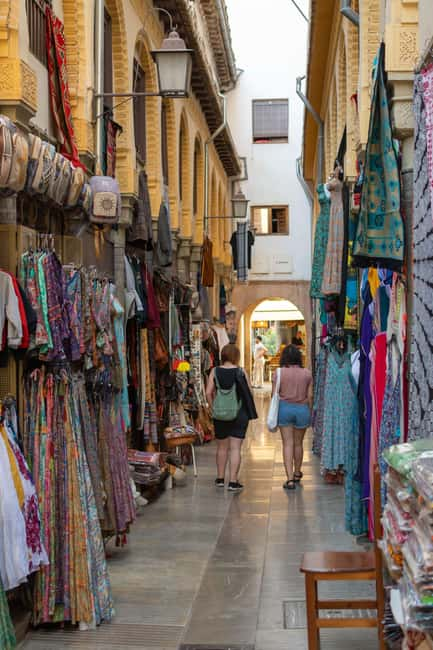
Next comes the Alcaicería, an old market area near the Cathedral. Its lanes recall the city’s former souk, and the atmosphere shifts quickly from open city streets to narrow passages lined with shops.
You may see traditional Granada crafts such as inlay work and fajalauza pottery. Inlay, known locally as taracea, uses pieces of wood and other materials to create detailed patterns. Fajalauza is a traditional ceramic style associated with Granada. The tour gives you a chance to understand these crafts before deciding if you want to shop.
This part of the walk is best for travelers who enjoy the connection between history and daily commerce. It is also one of the more crowded sections, so keep close to the group. The headset system helps here when six or more people are on the tour.
Do not expect a long shopping break. Two hours is not enough for extended browsing, and the purpose of the stop is to explain the market’s role and point out local craft traditions. If something catches your eye, note the shop and return later.
More walks through the Albaicin and Sacromonte:
- Granada: Albaicín and Sacromonte Guided Sunset Walking Tour
★ 4.9 · 2,962 reviews - Sacromonte: Flamenco Show at Cuevas Los Tarantos Tickets
★ 4.5 · 2,051 reviews - Albaicin & Sacramonte Electric Bike Tour in Granada
★ 5.0 · 1,044 reviews - Granada: Albaicin and Sacromonte E-Bike Tour
★ 4.9 · 852 reviews
Plaza Bib-Rambla and the city’s social center
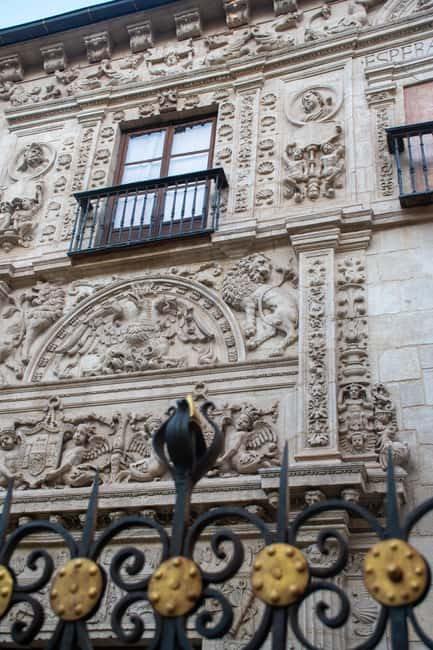
Plaza Bib-Rambla provides a change of scale. After the tight lanes of the Alcaicería, you arrive in a broad square with a long connection to Granada’s public life.
Your guide will explain the stories linked to the plaza and may point you toward one of the city’s classic food pairings: chocolate and churros. This is a useful place to mark for a later snack, since food and drinks are not included in the tour.
The square works well as part of the route because it shows how Granada moves between private lanes and shared public spaces. You get a quick sense of the city as a place for ceremonies, markets, conversation, and everyday stops for coffee or sweets.
Granada Cathedral, three architectural styles in one building
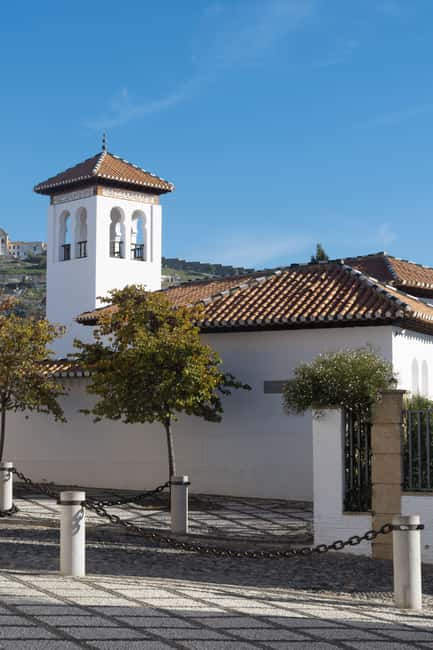
The Cathedral is one of the tour’s main landmarks. Its architecture reflects more than one period, and the guide explains the three styles found in the building. That makes the stop more useful than a quick photograph from outside.
Look closely at the walls and listen for the explanation of medieval graffiti. These marks are easy to overlook, but they offer a human detail that grand religious buildings often hide. They remind you that the Cathedral was not only a finished monument. People passed through it, worked around it, and left traces behind.
The tour does not include entrance tickets, so do not confuse the guided stop with a full interior visit. If the Cathedral is high on your list, schedule additional time and buy admission separately.
Royal Chapel and La Madraza across the street
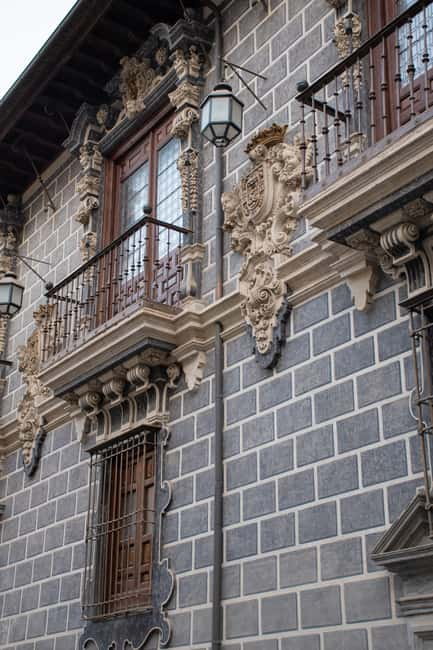
The Royal Chapel is the mausoleum of the Catholic Monarchs, Ferdinand and Isabella. Its location opposite La Madraza creates one of the most telling juxtapositions on the route: a Christian royal burial place facing a former Islamic school.
The guide can help you understand why this small area matters. Granada’s change of rule was not an abstract event. It reshaped the city’s buildings, institutions, and public identity. Seeing the Royal Chapel and La Madraza close together makes that shift easier to grasp.
La Madraza was a center of learning during the Nasrid period. The stop adds an academic and cultural layer to the walk, balancing the royal and religious monuments nearby.
Again, admission is not part of the $17 fee. The tour is valuable here because it gives you a plan for independent visits. You can decide which interiors deserve your time instead of entering buildings without knowing why they matter.
Crossing toward the Albayzín
After the Cathedral quarter, the walk continues beyond Gran Vía toward the Albayzín. This is where the character of the route changes most clearly.
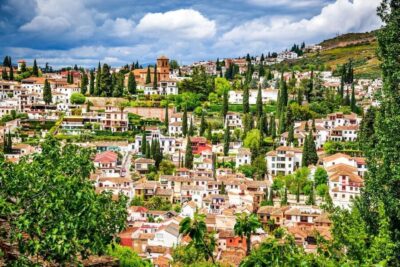
The Albayzín is a UNESCO World Heritage neighborhood known for narrow lanes, irregular streets, and whitewashed buildings. It is not a flat, orderly district designed for quick sightseeing. You will turn corners, climb gradually, and pass through streets shaped by centuries of urban growth.
This section rewards sturdy shoes. The surfaces include cobblestones, and the climb becomes more demanding as you approach San Nicolás. One past participant described the walk as tiring because of the paving and uphill route, while still recommending it for people who are fit and comfortable on foot.
You should also leave the stroller at home. Baby strollers are not allowed, and the tour is not suitable for wheelchair users. These limits are tied to the old streets and uphill sections, not just to the group’s size.
Carrera del Darro and the Bañuelo area
Carrera del Darro is one of Granada’s most atmospheric streets. The route follows this historic corridor before beginning the climb into the Albayzín.
The guide discusses the Bañuelo, one of the places connected with Granada’s Islamic past, as well as the Archaeological Museum. Even if you do not enter either attraction during the tour, the explanations help you understand what you are seeing along the street.
This section is good for slowing down and looking around, but the schedule remains tight. You may want photographs, yet you also need to keep moving if the group is to reach the viewpoint within two hours. Ask questions as you walk, especially if you want a recommendation for a later visit to the Bañuelo or museum.
Aljibe de Trillo and the practical side of old neighborhoods
The route includes the Aljibe de Trillo, a historic water cistern in the Albayzín. Such features matter because they show how residents managed water in a hillside neighborhood long before modern plumbing.
The stop is a reminder that the Albayzín is more than a pretty district for photographs. Its lanes, cisterns, and steep layout reflect the practical needs of a dense old settlement. A guide adds the context that you are unlikely to get from walking through alone.
The neighborhood can be confusing on your own, especially if you are trying to reach San Nicolás from the lower streets. The guided route lets you focus on the surroundings instead of constantly checking a map.
San Nicolás Viewpoint and the final climb
The tour ends at Mirador de San Nicolás, one of Granada’s signature viewpoints. The reward is a broad view toward the Alhambra, with the Sierra Nevada visible in the distance when conditions allow. The supplied information specifically highlights the view of the Alhambra, so bring your camera, but do not assume every day will offer perfect visibility.
Reaching the viewpoint is part of the experience. You do not simply arrive by bus or step out of a vehicle. You walk through the old streets, climb the hill, and see how the city opens up from above.
This finish also affects how you should plan the rest of your day. You may want water before the final section, and comfortable shoes are essential. Since there is no hotel pickup or transportation included, arrange your own way back after the tour. The endpoint is different from the starting point, so do not leave your return plans until the last minute.
What the $17 price really covers
At $17 per person, this is a strong value if you want orientation, local context, and a carefully connected route. You are paying for a live guided walk through several major areas, a small group capped at 12, and headsets when the group reaches six or more.
The price does not cover monument tickets, food, drinks, hotel pickup, or transport. That keeps the basic cost low, but you should budget extra if you plan to visit the Cathedral, Royal Chapel, La Madraza, Bañuelo, or Archaeological Museum interiors.
The best value comes from using the walk as a first look. Let the guide show you what deserves a return visit, then spend your own time inside the places that match your interests. If you already know Granada well, the short route may feel too introductory.
How to prepare for the two-hour walk
Wear shoes that can handle cobblestones and an uphill finish. Bring water, particularly in warm weather, since the route combines city walking with a climb into the Albayzín.
Arrive at the statue of Isabel la Católica and find the light blue umbrella. The guide speaks English or Spanish, so select the language that lets you follow the details comfortably.
The tour offers free cancellation up to 24 hours before the start, and you can reserve now and pay later. Those terms help if your Granada schedule is still changing, but the more important practical point is to check the start time and allow enough time to reach the meeting point.
Who should book this Granada experience?
I would choose this walk for a first visit to Granada, especially if you want the city explained rather than simply photographed. It suits people who enjoy architecture, local crafts, religious buildings, Islamic-era sites, and neighborhood walks.
It is also a good match if you have only a short time in the city. The route covers a lot in two hours, although the pace means you will not get a full visit inside every monument.
I would be more cautious if you have limited mobility, use a wheelchair, need a stroller, or dislike hills and uneven pavement. The climb to San Nicolás is central to the route, not an optional extra.
Should you book this tour?
Book it if you want a compact, well-connected introduction to Granada for $17. The strongest reasons are the small group, the local guide, the useful headset system, and the final walk through the Albayzín to San Nicolás.
Skip it if your priority is extended time inside monuments or a completely flat route. For most fit walkers, though, the combination of the Cathedral quarter, old market streets, Carrera del Darro, and Alhambra view gives you a smart first look at a city that deserves more than a visit to the Alhambra alone.
FAQ
How long does the Granada Citycenter and Albayzín tour last?
The guided walking tour lasts two hours.
What language is the tour offered in?
The live guide speaks English or Spanish.
Where does the tour begin?
It begins at Plaza Isabel la Católica, beside the statue. Look for the light blue umbrella.
Where does the tour finish?
The tour finishes at Mirador de San Nicolás in the Albayzín.
Are monument entrance tickets included?
No. Tickets to the monuments are not included in the tour price.
Is the tour suitable for wheelchair users or baby strollers?
No. The experience is not suitable for wheelchair users, and baby strollers are not allowed.
Just added around Granada
- Granada: Authentic and intimate Flamenco Show with Snacks★ 4.2 · 9 reviews
- Water paths. Private adventure and history tour★ 5.0 · 6 reviews
- Flamenco Show in the Caves of Sacromonte★ 4.5 · 26 reviews
- From Granada: Day Trip to Trevélez with Ham Factory★ 4.6 · 12 reviews
- Guided tour Granada Unexplained★ 5.0 · 5 reviews
- Albaicín and Sacromonte Sunset tour + Flamenco show★ 5.0 · 11 reviews
- Guided tour Conspiracy in the Albaicín★ 5.0 · 6 reviews
- Albaicin guided tour with dogs★ 5.0 · 6 reviews
Albaicín & Sacromonte Walking Tours, compared.
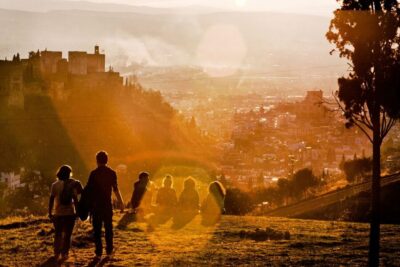
Albaicín and Sacromonte Guided Sunset Walking Tour
Read our review →
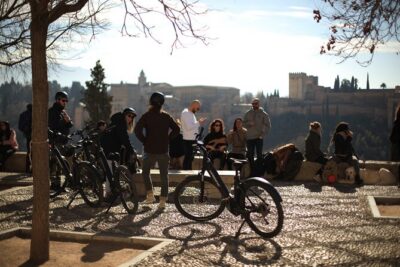
Albaicin & Sacramonte Electric Bike Tour in Granada
Read our review →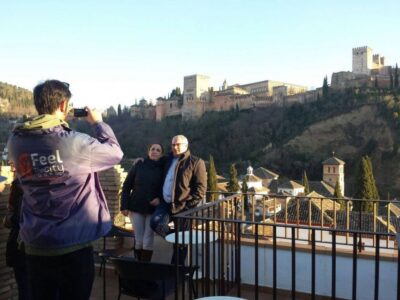

Granada’s Hidden Treasures: Albayzin and Sacromonte Walking Tour
Read our review →
Albayzín y Sacromonte, Unesco Heritage Neighborhoods
Read our review →Browse the lists this tour appears in