
Reviewed · ALHAMBRA TOURS
Granada: “Alhambra´s Craft Workshop”
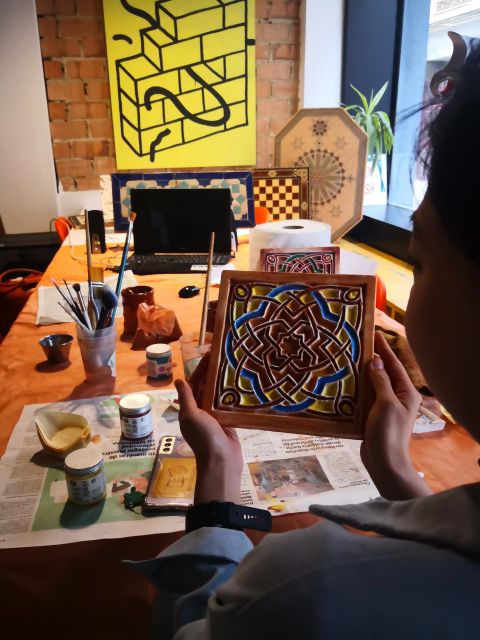
At this Granada workshop, the Alhambra becomes something you can handle, shape, paint, and carry home. You choose from about a dozen projects, then work with artisan Frederick, also identified as Frédéric, to make a small piece inspired by Andalusian craftsmanship.
I like the wide choice of projects, from painting a Nasrid tile to building a marquetry chessboard. I also like the calm, social pace: clear instruction, music, and room for children and adults to work side by side. The main consideration is that this is a craft lesson, not a guided visit to the Alhambra, and the two-hour session may feel short if you want to master a complex technique.
Key points
- Choose from about a dozen crafts: Options include mosaic panels, painted Nasrid tiles, polychromatic plasterwork with gold leaf, stucco carving, and marquetry.
- Work with a specialist artisan: Frederick provides the tools, materials, techniques, and practical help.
- Take home a handmade souvenir: Your finished piece is personal, rather than a standard shop purchase.
- Central Granada location: The workshop is at C. Horno de Haza, 29, about 500 meters from the cathedral.
- Good for families with older children: Children under six cannot take part, but the instruction has worked well for children in mixed-age groups.
- A relaxed break from sightseeing: The session gives you two quiet hours away from monuments, queues, and walking.
A Hands-On Alhambra Memory in Central Granada
The Alhambra is famous for its carved stucco, geometric tiles, painted surfaces, woodwork, and careful patterns. This workshop lets you borrow those ideas for a couple of hours and make a small work of your own.
You are not simply watching an artisan demonstrate a craft. You select a project, use the provided tools and materials, and receive help as you work. That makes the experience useful for anyone who wants more than another refrigerator magnet or printed postcard from Granada.
The finished piece may not look like museum work, and it is not meant to. The pleasure is in seeing how much care goes into Andalusian decoration. Even a simple painted tile can make you notice color, repetition, symmetry, and surface detail differently when you visit the Alhambra afterward.
I also like the setting. The workshop is in central Granada, only about 500 meters from the cathedral, so you can fit it into a day of sightseeing without arranging a long trip outside town. There is no hotel pickup, but that is hardly a problem if you are already staying in or near the center.
More ways to see the Alhambra:
- Granada: Alhambra & Nasrid Palaces Tour with Tickets
★ 4.7 · 19,801 reviews - Granada: Alhambra & Generalife Fast-Track Guided Tour
★ 4.7 · 8,313 reviews - Granada: Alhambra & Gardens Tour w/Nasrid Palaces Option
★ 4.5 · 6,437 reviews
Arriving at C. Horno de Haza, 29
The meeting point is C. Horno de Haza, 29. Look for the address and go inside the workshop, where your artisan will be waiting.
The venue is described as a cozy fine arts space. That matters here because the activity depends on sitting down, concentrating, and having room for tools and materials. It is a different mood from the Alhambra itself, where you are usually moving from one room or courtyard to the next.
Plan to arrive with enough time to find the address. The activity begins at the workshop rather than at your hotel, and hotel transfers are not included. Since the start time depends on availability, check the schedule when booking.
The location also makes this a handy pairing with other central sights. You could schedule it before or after time around the cathedral, though you should leave yourself enough breathing room. Craft work is more enjoyable when you are not watching the clock because of a dinner reservation or another timed entry.
Choosing One of About a Dozen Projects
At the start, you choose the type of piece you want to make. The selection is one of the strongest parts of the experience because it gives you room to match the activity to your interests and patience.
The available choices include the following:
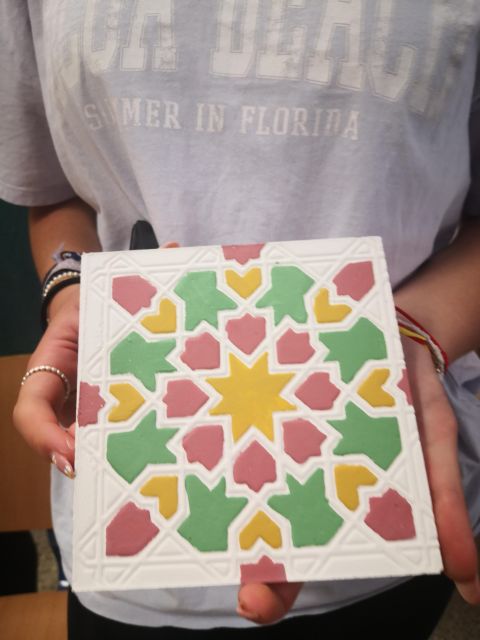
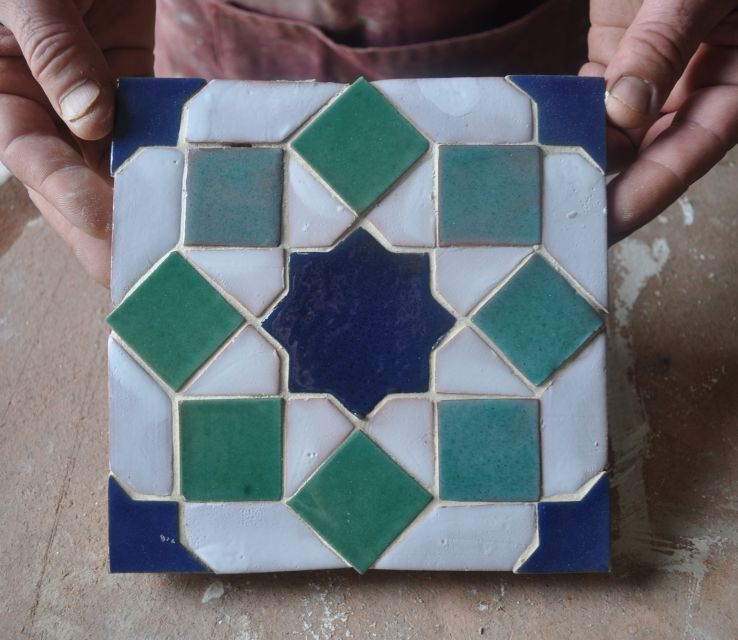
- An authentic mosaic tiled panel
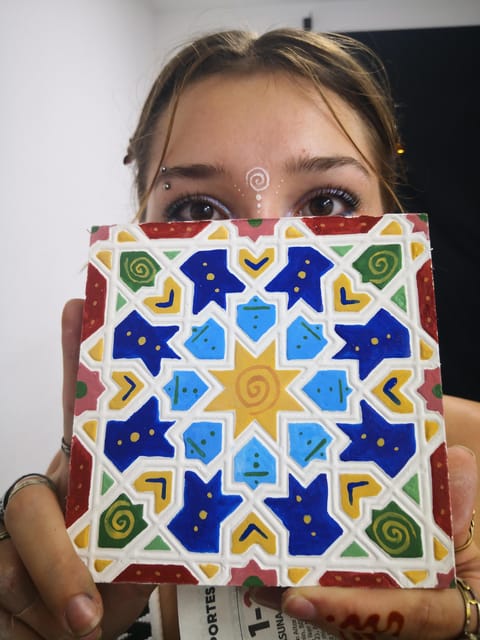
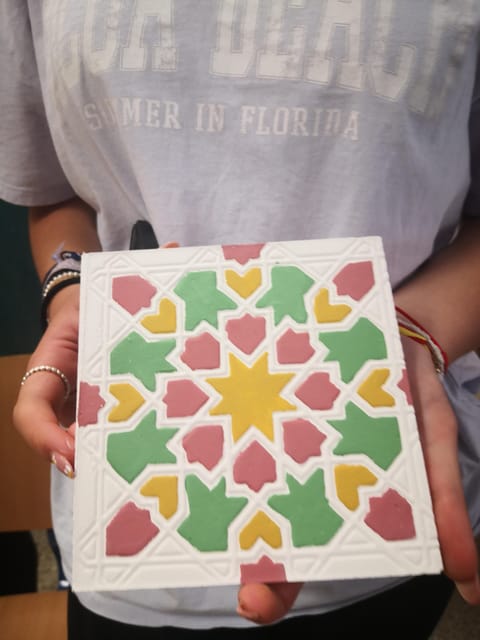
- A painted Nasrid tile
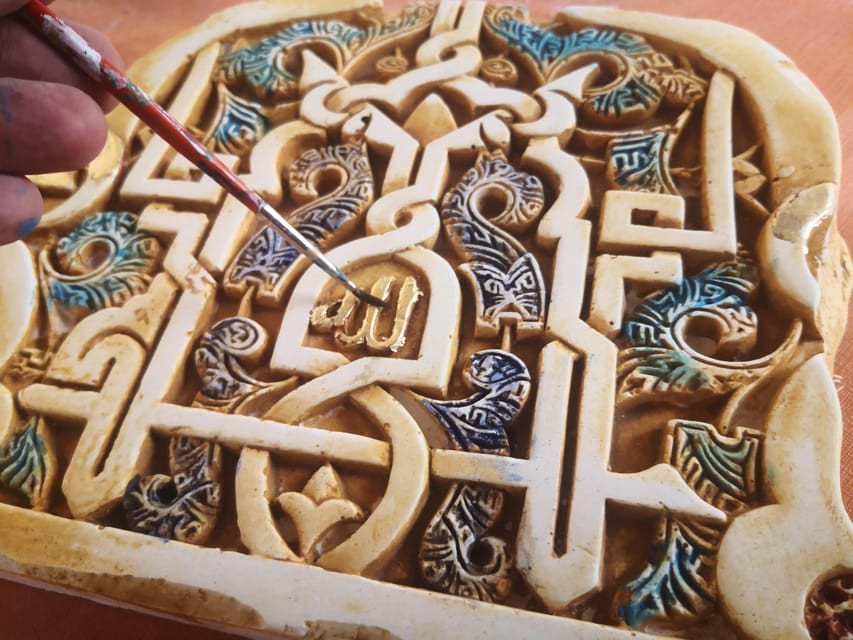
- A reproduction of Alhambra polychromatic plasterwork with gold leaf
- A stucco piece made with a direct carving method used in al-Andalus
- A chessboard introducing basic Granada marquetry techniques
- Other related decorative projects
This range gives the workshop a useful mix. Painting a tile may suit you if you want a straightforward, colorful project. Mosaic work offers a closer look at how small pieces form a larger pattern. The plaster and stucco choices are more connected to the carved decoration associated with the Alhambra.
The chessboard is the most ambitious-sounding option. It introduces basic marquetry, the Granada wood-inlay tradition, and gives you a useful object rather than a wall decoration. The finished chessboard can be glazed by the artisans for an extra charge, so ask about that at the beginning if you are considering it. The extra glazing cost is not included in the $69 activity price.
The exact choice may depend on what is available on the day. The workshop promises about a dozen pieces, but the supplied information does not give a fixed menu for every session. If one particular craft matters to you, ask before committing to the booking.
Learning the Techniques, Not Just Painting a Souvenir
The value of the class comes from the instruction. Frederick helps you understand the basic techniques behind Hispanic-Muslim decorative art and shows you how to use the tools and materials.
That does not mean you leave as a professional artisan. Two hours is enough for an introduction and a finished beginner project, not years of training. Still, the lesson gives context to details you might otherwise walk past in Granada: repeated tile patterns, carved plaster, gilded surfaces, and wood arranged in precise geometric designs.
The materials and tools are included. You do not need to bring a craft kit, and you can focus on the work rather than shopping for supplies. Access to proper tools also makes the activity more satisfying than a quick paint-and-glue session designed only for children.
Frederick’s teaching style is an important part of the experience. He has been praised for clear instructions, patience, and keeping people engaged with humor and music from several cultures. That combination should help if you are unsure of your artistic ability. You can ask for help without feeling that you are slowing the group down.
Instruction is available in English, French, and Spanish. This is especially useful in a hands-on class, where a small misunderstanding about a tool or technique can affect the finished piece.
A few more Granada tours and experiences worth a look
- Drawing and Painting Class of Alhambra in Granada
★ 5.0 · 27 reviews - Granada: Perfume Workshop
★ 4.9 · 18 reviews - 2 hours Craft workshop “The Alhambra with your hands”
★ 5.0 · 11 reviews
What Two Hours Actually Feel Like
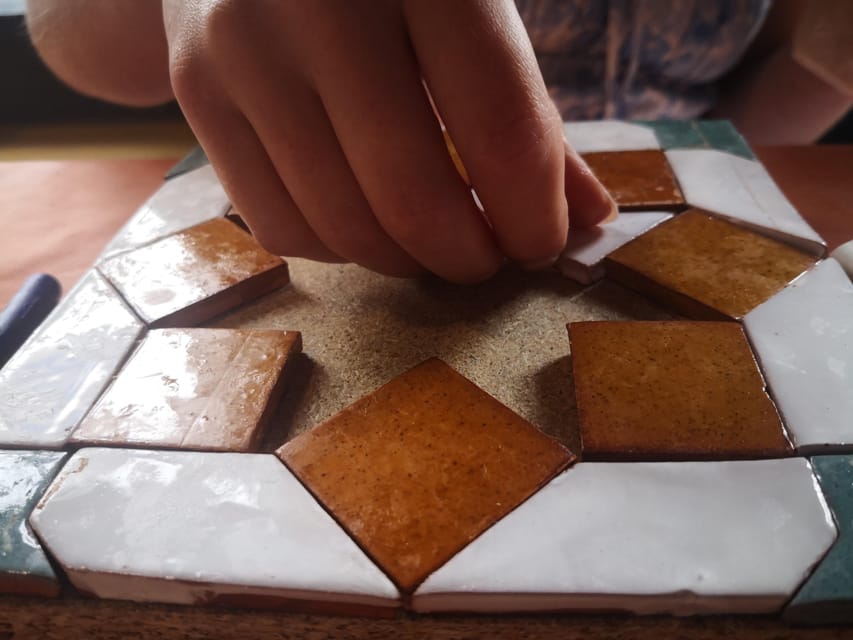
The session is short enough to fit into a busy Granada itinerary, but long enough to create something tangible. You begin by selecting a project and learning the basic process. The main part of the activity is then spent working with the materials while the artisan offers guidance.
You should expect a practical class rather than a formal lecture. The focus is on making. That means the historical background is likely to come through the techniques and designs rather than through a long presentation about Islamic Spain.
The relaxed format is a real benefit after a full day of sightseeing. Granada involves hills, stone streets, major monuments, and plenty of walking. Sitting down to paint, arrange, carve, or assemble can reset your pace.
It also gives you time with the people you are traveling with. One person can paint a tile while another works on a wood project, and children can take part in the same general setting if they meet the minimum age. The experience can be social without requiring everyone to choose the same craft.
The tradeoff is that the activity will not suit anyone looking for a fast, highly polished souvenir. Handmade work takes concentration. Your finished piece may show beginner marks, uneven paint, or imperfect pattern alignment. That is part of its character, but you should choose this class because you want to make something, not because you expect factory-level results.
Mosaic, Nasrid Tile, Plaster, Stucco, and Marquetry
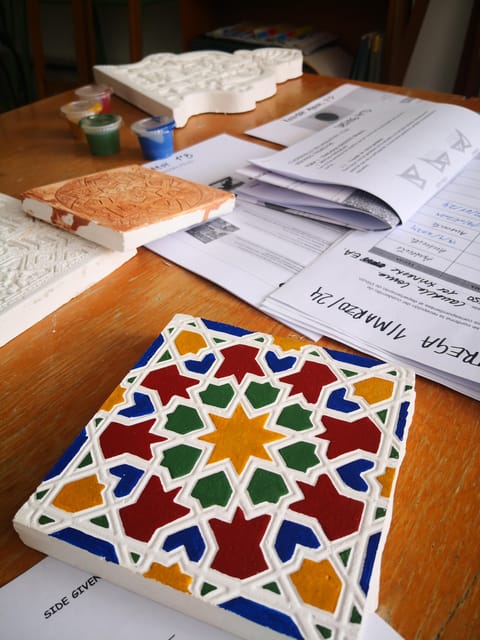
Each project offers a different way to connect with Granada’s decorative traditions.
Mosaic panel
The mosaic option is a natural choice if you like pattern and geometry. You create a tiled panel from smaller elements, learning how repeated shapes and color relationships create a larger design.
This is likely to appeal to both adults and older children because the visual result develops as you work. It also gives you a direct link to the tiled surfaces associated with Andalusian decoration.
Painted Nasrid tile
Painting a Nasrid tile is a good option if you want a manageable project with a strong connection to the Alhambra. The design can serve as a reminder of the palace long after you leave Granada.
It may also be the best pick if you are short on time or do not want a more complicated construction project. You still learn about decorative treatment, but the activity centers on painting rather than assembling or carving.
Polychromatic plasterwork with gold leaf
The plasterwork choice adds color and metallic detail. You decorate a reproduction of Alhambra plasterwork using polychromatic treatment and gold leaf.
Gold leaf gives this project extra appeal, but it also means you should listen closely to the instructions and handle the materials with care. It is a decorative option for someone who wants a more ornate piece.
Direct-carved stucco
The stucco project reproduces the direct carving technique used in al-Andalus. This is the choice for anyone curious about how carved decoration is formed rather than simply painted.
Carving requires patience. You may find it more tactile than the tile options, but it could feel demanding if you want an effortless craft. The artisan’s help matters most here.
Granada marquetry chessboard
The chessboard introduces basic concepts of Granada marquetry, or wood inlay. It is a practical object and one of the more unusual souvenirs available in the workshop.
Remember that glazing the chessboard costs extra. Ask about the fee before you choose it, especially if you are working with a fixed budget.
The $69 Price and What You Receive
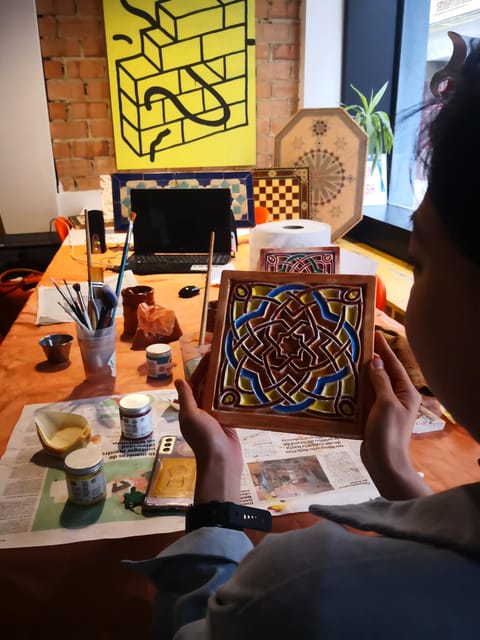
At $69 per person, this is not the cheapest two-hour activity in Granada. It is also not priced like a simple drop-in painting session. The fee includes an artisan specializing in Hispanic-Muslim craftsmanship, your craft materials and tools, the project itself, access to a handicraft display, and the finished piece to take home.
The strongest value is the combination of instruction and materials. Buying a handmade object in Granada may cost less or more depending on the item, but it does not give you the process behind it. Here, you leave with both a souvenir and an understanding of how it was made.
The price makes the most sense for you if you enjoy creative activities or want a break from standard sightseeing. It is less compelling if you are mainly looking for a cheap keepsake or have no interest in making things by hand.
Food and drinks are not included. That is easy to handle because the workshop is in central Granada, but plan a café stop separately.
Families, Beginners, and Accessibility
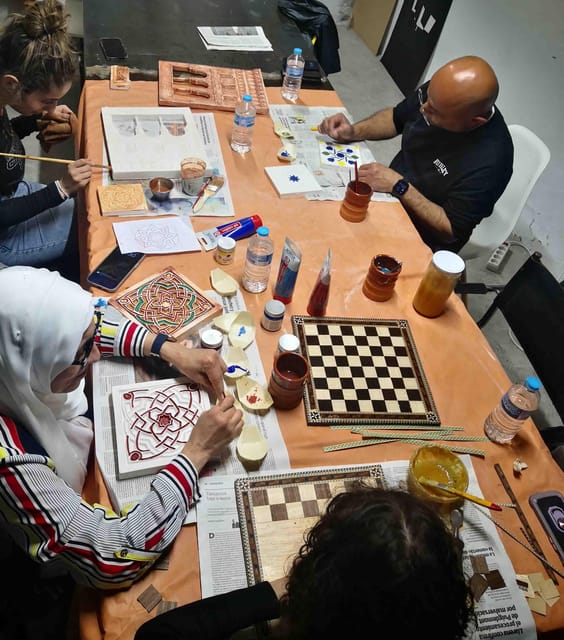
The workshop is designed for children, adults, and families, but children under six cannot take part. Older children can benefit from the clear, patient instruction, especially if they enjoy drawing, building, or working with their hands.
A mixed-age group can work well here because the projects offer different levels of challenge. A child might choose a painting project while an adult tries marquetry or carved stucco. The data does not specify a recommended age beyond the six-year minimum, so parents should use their judgment about attention span and fine motor skills.
You do not need previous craft experience. The activity teaches basic methods and provides help as you work. Still, people who dislike careful, seated projects may find the pace slow.
The workshop is not suitable for wheelchair users. No further accessibility details are provided, so ask the provider directly if you have other mobility or access needs.
Cancellation and Planning Details
You can cancel up to 24 hours before the activity for a full refund. A reserve-now, pay-later option is also available, which helps if your Granada plans are still shifting.
The activity lasts two hours, but available start times can vary. Check the schedule before booking and allow time to reach C. Horno de Haza, 29.
The instructor can teach in English, French, or Spanish. There is no hotel pickup or drop-off, so you make your own way to the central workshop.
The overall rating is 4.9 from 32 ratings, with especially strong praise for Frederick’s patience, clear instruction, and ability to keep the session warm and relaxed. The most consistent strength is the personal attention, not just the finished artwork.
Should You Book the Alhambra Craft Workshop?
Book it if you want a hands-on connection to Granada’s art, a break from walking, or a souvenir that carries your own fingerprints. It is particularly well suited to couples, families with children over six, and anyone who likes painting, pattern, woodwork, or small-scale projects.
The workshop is also a good choice after visiting the Alhambra, when you have seen the decoration but want to understand it through making. Choose the mosaic or tile if you want a simpler introduction. Pick plasterwork, stucco, or marquetry if you are happy to give the work more concentration.
Skip it if your priority is a guided Alhambra tour, a major historical lecture, or a quick activity that requires little patience. This is a two-hour craft class in central Granada, with a handmade result and a few imperfect edges. For the right kind of visitor, that is exactly the point.
FAQ
Where does the Alhambra Craft Workshop take place?
It takes place at C. Horno de Haza, 29, in central Granada. The workshop is about 500 meters from the cathedral.
How long does the workshop last?
The activity lasts two hours. Starting times vary, so check availability when you book.
What crafts can I choose?
You can choose from about a dozen pieces, including a mosaic panel, a painted Nasrid tile, polychromatic plasterwork with gold leaf, a direct-carved stucco piece, and a marquetry chessboard.
Is the instructor available in English?
Yes. Instruction is available in English, French, and Spanish.
Can children join the workshop?
Children can participate if they are at least six years old. Children under six are not suitable for this activity.
Is the chessboard glazing included?
No. The chessboard can be glazed by the artisans for an extra charge. Ask about the cost at the beginning of the activity.
Just added around Granada
- Granada: Authentic and intimate Flamenco Show with Snacks★ 4.2 · 9 reviews
- Water paths. Private adventure and history tour★ 5.0 · 6 reviews
- Flamenco Show in the Caves of Sacromonte★ 4.5 · 26 reviews
- From Granada: Day Trip to Trevélez with Ham Factory★ 4.6 · 12 reviews
- Guided tour Granada Unexplained★ 5.0 · 5 reviews
- Albaicín and Sacromonte Sunset tour + Flamenco show★ 5.0 · 11 reviews
- Albaicin guided tour with dogs★ 5.0 · 6 reviews
- Guided tour Conspiracy in the Albaicín★ 5.0 · 6 reviews
Alhambra Tours, compared.
Alhambra & Gardens Tour w/Nasrid Palaces Option
Read our review →

Fast-Track Alhambra & Nasrid Palaces Guided Tour
Read our review →
Skip The Line Alhambra and Generalife Guided Tour
Read our review →
Alhambra Ticket and Guided Tour with Nasrid Palaces
Read our review →
Alhambra & Generalife Skip the line Small Group including Nasrid Palaces
Read our review →Browse the lists this tour appears in